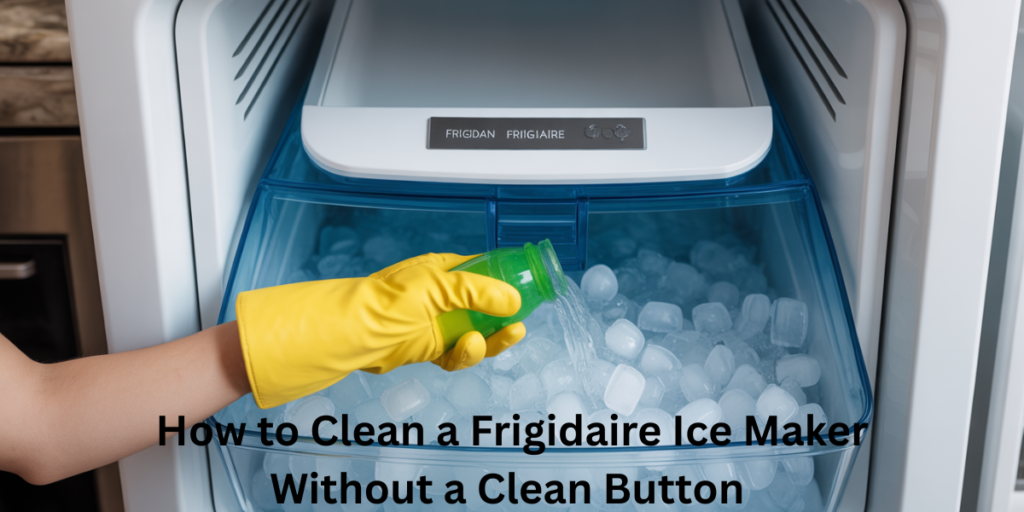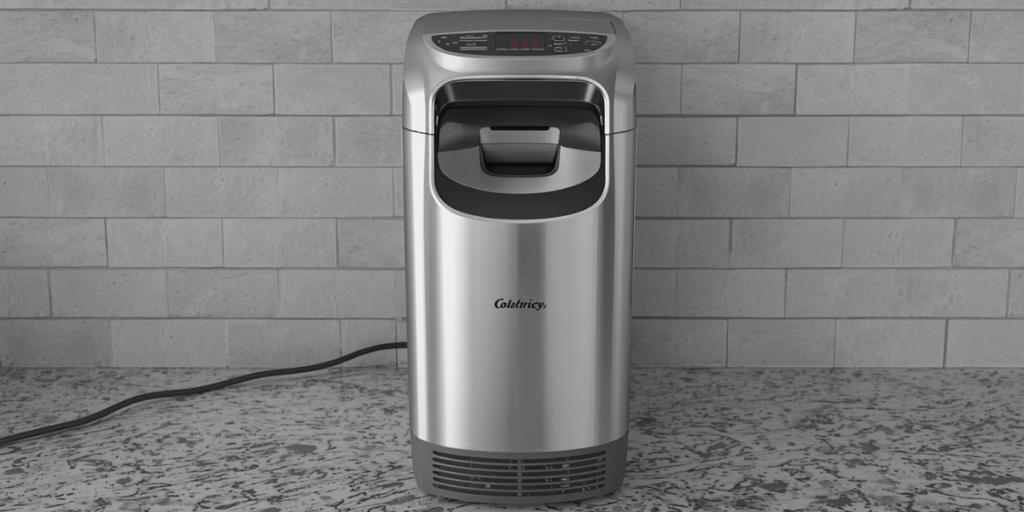

If your Frigidaire EFIC117-SS has started making ice that smells a little off, tastes stale, or looks cloudy, it almost always comes down to one thing — the unit hasn’t been cleaned properly in a while. I’ve owned and tested several Frigidaire countertop ice makers, including this exact 26 lb stainless steel model, and I can tell you the cleaning process is simple once you know the correct order of steps, based on the official Frigidaire user manual.
In this guide, I’ll walk you through the full Frigidaire EFIC117-SS cleaning process — interior, exterior, water tray, ice basket, and drain plug — plus related topics like hard water descaling and why your unit might be running slower than usual.
Table of Contents
Quick Answer: How to Clean a Frigidaire EFIC117-SS
| Step | What To Do |
|---|---|
| 1 | Press Power Button to stop the cycle, then unplug the unit |
| 2 | Let it sit until it reaches room temperature (15–20 minutes) |
| 3 | Push the Water Tray back so leftover water drains into the reservoir |
| 4 | Open the Drain Plug underneath and drain out all water |
| 5 | Remove the Ice Basket and Water Tube Screen, rinse the screen |
| 6 | Wipe the interior with a soft cloth dipped in warm water + white vinegar |
| 7 | Rinse with a clean, damp cloth (no vinegar residue left behind) |
| 8 | Wash the Ice Basket and Ice Scoop separately in warm soapy water |
| 9 | Wipe the exterior with a damp cloth and mild dish soap if needed |
| 10 | Replace the Drain Plug and Water Tube Screen, plug the unit back in |
What You’ll Need Before You Start
| Supply | Purpose |
|---|---|
| White vinegar | Breaks down mineral scale and biofilm without harming plastic parts |
| Soft microfiber cloth | Wipes the interior without scratching the evaporator area |
| Mild dish soap | For the ice basket, scoop, and exterior |
| Warm water | Mixed with vinegar for interior cleaning, and alone for rinsing |
| Small soft brush (optional) | Helps clean the Water Tube Screen mesh |
According to NSF’s cleaning guidance for home appliances, a plain water-and-vinegar rinse is enough for most kitchen appliance interiors — you don’t need bleach, ammonia-based cleaners, or abrasive scrubbers on any part of the unit, since they can leave behind residue or damage the plastic housing around the ice-making chamber.
Cleaning Before First Use
If you just unboxed your Frigidaire EFIC117-SS, don’t fill it and start making ice right away. Wipe the interior, ice basket, and scoop with a warm-water-and-vinegar cloth first, exactly like the deep-clean steps below, then rinse and dry everything. Manufacturing residue and packaging dust can sit inside new units, so this first wipe-down protects the taste of your very first batch of ice — the same first-clean logic applies whether you’re setting up this model or one of the UV sanitized ice makers built for offices.
Step-by-Step: Cleaning the Frigidaire EFIC117-SS Interior
1. Stop the cycle and unplug the unit.
Press the Power Button first so the compressor and fan shut down properly, then pull the plug from the wall outlet. Never clean the ice maker while it’s still running or still plugged in.
2. Let it warm up to room temperature.
This usually takes 15–20 minutes. Skipping this step is one of the biggest mistakes people make — cleaning a cold unit means the vinegar solution won’t loosen mineral deposits properly, and you risk thermal shock to the internal tubing.
3. Reposition the Water Tray.
If the Water Tray isn’t already sitting vertically behind the Evaporator Fingers, gently push it back so any remaining water drains into the Water Reservoir instead of pooling inside the unit.
4. Open the Drain Plug.
It’s located underneath the front of the unit. Open it fully and let all standing water drain out into a bowl or sink. Leftover water sitting in the reservoir for days is one of the main reasons ice starts tasting or smelling like fish, mildew, or plastic — and it’s the same root cause behind most reports of an ice maker suddenly stopping.
5. Remove the Ice Basket and Water Tube Screen.
Pull the basket out completely. Then take out the Water Tube Screen — a small mesh filter — and rinse it under running water to clear out mineral buildup and debris. A clogged screen is also a common reason a countertop ice maker’s production drops.
6. Clean the interior.
Dampen a soft cloth with warm water mixed with a little white vinegar, then wipe down the interior walls, the base, and around (not directly on) the Evaporator Fingers. Rinse with a clean, plain-water cloth afterward so no vinegar smell transfers into your next batch of ice. The FDA’s kitchen appliance cleaning guidance recommends the same clean-then-rinse order for any food-contact surface.
Important: Do not clean the Evaporator Fingers directly with a cloth, brush, or any tool. Frigidaire repeats this instruction across every EFIC model manual — the fingers are delicate, and scrubbing them can bend the metal or damage the refrigerant coil behind them.
7. Reassemble.
Put the Water Tube Screen back in place, then close the Drain Plug securely before you plug the unit back in — otherwise water will leak out the bottom the next time you fill the reservoir.
Cleaning the Ice Basket, Scoop, and Exterior
- Ice Basket & Scoop: Wash separately in warm, soapy water. Rinse thoroughly and let them air-dry completely before placing them back inside — putting a damp basket back in traps moisture and speeds up mold growth, per CDC guidance on moisture-driven mold.
- Exterior: Wipe down the stainless steel body with a soft damp cloth. Use a small amount of mild dishwashing soap only if there are fingerprints or spills, and dry it afterward to avoid water spotting on the steel finish.
- Control panel and cover: Just a dry or barely-damp cloth — never spray liquid directly onto the buttons or display.
Hard Water? Here’s How to Descale It Properly {#hard-water}
If you’re on hard water, white chalky deposits build up on the Evaporator Fingers and inside the reservoir faster than usual — that’s mineral scale, not mold. The same vinegar-and-water wipe-down handles it, but if scale is heavy, let the solution sit on the affected area for 2–3 minutes before wiping instead of wiping immediately. The USDA’s approved cleaners list for food-contact surfaces confirms vinegar as a safe, non-toxic descaling option. For very hard water areas, switching to filtered or bottled water in the reservoir will noticeably slow down how fast scale returns.
Vinegar Alternative: Using Citric Acid
If you don’t want the vinegar smell lingering, food-grade citric acid dissolved in warm water works as a milder alternative for the interior wipe-down. Use about a teaspoon per cup of warm water, apply the same way, and rinse thoroughly afterward. Never mix citric acid with bleach or other cleaning chemicals — NSF explains why mixing cleaners and sanitizers is risky even at home.
How Often Should You Clean a Frigidaire EFIC117-SS?
| Usage Pattern | Recommended Cleaning Frequency |
|---|---|
| Daily household use | Every 1–2 weeks |
| Occasional / weekend use | Every 3–4 weeks |
| Used for parties or heavy entertaining | After each heavy-use event |
| Not used for 2+ weeks | Drain fully and clean before next use |
| Hard water area | Every 1–2 weeks (mineral scale builds faster) |
Common Mistakes That Cause Bad-Smelling or Cloudy Ice
- Leaving standing water in the reservoir for days between uses — the number one cause of a musty or fishy-tasting ice.
- Not draining the unit before storage if you won’t use it for more than two weeks.
- Using bleach or strong chemical cleaners — EPA’s mold and moisture guidance notes that harsh chemicals can leave residue rather than solve the underlying moisture problem.
- Putting the ice basket back while still wet, which traps moisture and encourages mold.
- Scrubbing the Evaporator Fingers directly, which can bend or damage them.
- Skipping the rinse step after vinegar cleaning, leaving a sour smell in the next ice batch.
Persistent smell issues aren’t always cleaning-related either — sometimes it’s a wider household moisture problem, similar to what causes an ice maker to slow down in summer heat.
Frigidaire EFIC117-SS Cleaning Mode: Does It Have One?
The EFIC117-SS doesn’t have a dedicated “self-clean” button like some higher-end models — the Power Button and Select Button only control the on/off cycle and ice cube size. Some people search for a “clean cycle” or “clean button” expecting an automated rinse feature, but on this specific model, cleaning is a fully manual process using the steps above. If your unit is behaving differently, double-check your exact model number, since Frigidaire sells several similarly named variants (EFIC108, EFIC118, EFIC452) with slightly different control layouts — worth comparing against a Samsung ice maker’s noise and cycle behavior if you’re troubleshooting a mixed-brand kitchen.
Troubleshooting After Cleaning
| Problem | Likely Cause | Fix |
|---|---|---|
| Ice still tastes off after cleaning | Vinegar not fully rinsed | Wipe interior again with plain water only |
| Water leaking from bottom | Drain Plug not sealed properly | Reopen and reseat the plug firmly |
| Unit won’t restart after cleaning | Not given enough time to reach room temp | Wait a few more minutes before plugging in |
| Ice production slower than before | Water Tube Screen still has debris | Remove and rinse it again under running water |
| Musty smell returns quickly | Basket put back in wet | Air-dry basket fully before reinstalling |
For issues that go beyond a simple cleaning problem — like the unit not producing ice at all even though water is clearly running — that guide covers the mechanical side in detail. And if you’re seeing an actual error code on the display, check that before assuming it’s a cleaning issue.
FAQs
Can I use vinegar to clean my Frigidaire EFIC117-SS?
Yes. A mix of warm water and white vinegar is the manufacturer-recommended way to break down mineral deposits and light buildup inside the unit, consistent with FoodSafety.gov’s general appliance cleaning steps. Just rinse thoroughly afterward with a plain damp cloth.
How do I clean the Frigidaire EFIC117-SS water tray?
Push the Water Tray back into its vertical position so leftover water drains into the reservoir, then wipe it down with the same vinegar-and-water cloth you use on the rest of the interior.
Why does my Frigidaire ice maker smell bad even after cleaning?
It’s usually leftover moisture — either standing water in the reservoir or a damp ice basket put back too early. Make sure everything is fully dry before reassembly, and drain the unit completely if it’ll sit unused for more than a couple of weeks.
Is it safe to clean the Evaporator Fingers?
No — Frigidaire specifically instructs against directly cleaning or scrubbing the Evaporator Fingers. Wipe around them, not on them.
How often should I deep clean my countertop ice maker?
Every 1–2 weeks with regular use, or immediately before use if the unit has been sitting idle for more than two weeks — similar to the upkeep schedule I recommend in my budget nugget ice maker guide and About Me page, where I walk through how I test and maintain every unit before reviewing it. You can browse more hands-on breakdowns on the full reviews page.