Introduction
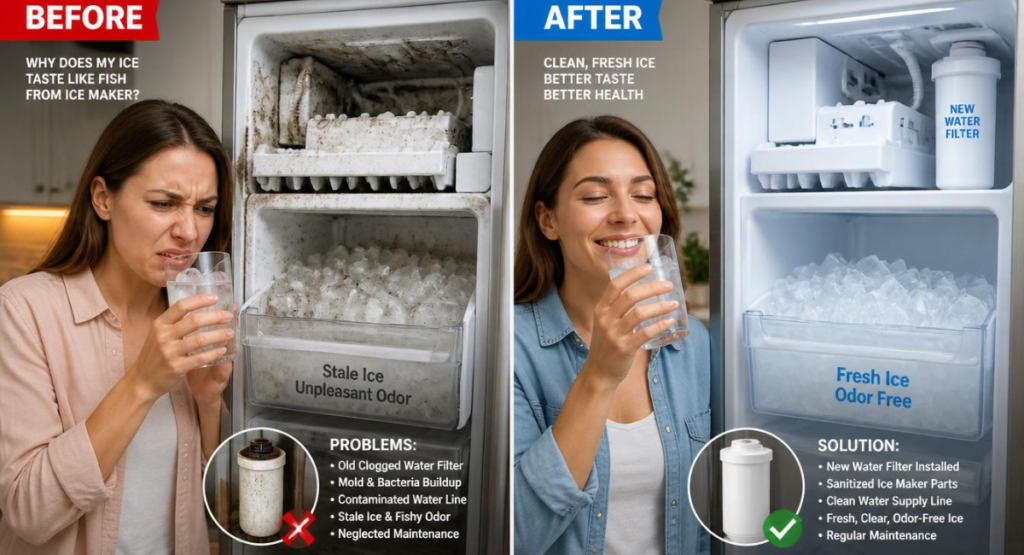
You drop a few ice cubes into your glass, take a sip — and it tastes like fish. Before you panic or call a technician, know this: it’s almost always fixable yourself in under an hour.
A fishy taste in ice usually comes from one of a few specific causes — absorbed freezer odors, an overdue water filter, mold inside the ice maker, or stale water sitting in the reservoir. According to Whirlpool’s official support documentation, improperly stored foods like seafood can leach odors directly into ice because air circulates between the fridge and freezer sections.
This guide breaks down all 10 real causes and gives you a clear, step-by-step fix for each one — whether you have a built-in fridge ice maker or a portable countertop unit from Samsung, LG, Frigidaire, or GE.
Table of Contents
What Does It Mean When Your Ice Tastes Like Fish?
A fishy ice taste means your ice has absorbed organic compounds — usually from food, mold, bacteria, or chemicals in the water supply. Fish odors are particularly strong because seafood proteins contain amines, and these volatile compounds spread through air and water easily.
When you ask “why does my ice maker smell like fish,” the answer almost always comes down to one or more of these sources:
- Trapped food odors in the freezer
- Dirty water filter or supply line
- Old or moldy ice maker components
- Stale water sitting in the reservoir
- Plastic contamination from new appliance parts
The good news? Every cause has a clear fix.
10 Real Reasons Why Does My Ice Taste Like Fish from Ice Maker
Let’s break down each reason and exactly how to fix it.
1. Absorbed Odors from Freezer Food
Ice cubes act like sponges. If you store uncovered fish, leftovers, or strong-smelling food in your freezer, your ice will absorb those smells within hours.
The Fix:
- Throw out any uncovered or expired food
- Store all freezer items in airtight containers or freezer bags
- Wrap raw fish or seafood in two layers — plastic wrap plus aluminum foil
- Discard the current ice batch and make a fresh one after cleaning
2. Dirty Water Filter Past Its Replacement Date
Your refrigerator’s water filter removes chlorine, sediment, and odor-causing chemicals from the supply line. After 6 months, the filter becomes saturated and starts releasing trapped bacteria back into the water — which then freezes into stinky ice.
The Fix:
- Check the filter age sticker or indicator light
- Replace the water filter every 6 months
- Use only manufacturer-recommended filter models
- Run 2-3 gallons of water through the dispenser after replacing
- Discard the first batch of ice after the filter change
This single fix solves most “ice from ice maker tastes bad” complaints.
3. Mold or Mildew in the Ice Maker
Your ice maker is dark, wet, and rarely cleaned — the perfect home for mold. Black or pink slime can grow inside the ice mold, water reservoir, or ice bin, giving your ice a fishy or musty taste.
The Fix:
- Unplug the ice maker or turn it off
- Remove the ice bin and discard all ice
- Wipe down with a 50/50 mix of warm water and white vinegar
- Use a soft brush to clean tight corners
- Rinse with clean water
- Let everything air dry completely before restarting
Repeat this every 3 months to prevent regrowth.
4. Contaminated Water Supply Line
The plastic water line running from your wall to your fridge can develop biofilm — a slimy layer of bacteria that causes nasty smells. This is one of the most overlooked reasons why ice cubes smell like fish.
The Fix:
- Shut off the water supply valve
- Disconnect the line from the fridge
- Flush the line with a vinegar solution (1 part vinegar, 3 parts water)
- Let it sit for 30 minutes, then flush with clean water
- Reconnect and run 2 gallons through the dispenser before using
5. Stale Water Sitting in the Reservoir
If you don’t use your ice maker often, water stagnates in the reservoir. Stagnant water grows bacteria fast, and the bacteria release sulfur and amine compounds that smell like fish.
The Fix:
- Empty the entire water reservoir weekly
- Discard the first batch of ice after vacations or long breaks
- Run a full cleaning cycle every 30 days
- Use your ice maker regularly to keep water fresh
6. New Ice Maker Plastic Smell (Off-Gassing)
Brand new ice makers — especially portable countertop ice maker models — can release plastic chemicals into the first few batches of ice. This is called off-gassing and creates a fishy or chemical taste in your ice.
The Fix:
- Run 3-5 cleaning cycles before first use
- Discard the first 5-10 batches of ice
- Wash all removable parts with soap and water
- Add a tablespoon of lemon juice to the first water fill
- The smell should fade within a week of regular use
7. Hard Water Mineral Buildup
Calcium, magnesium, and iron deposits coat the inside of your ice maker over time. When these minerals mix with bacteria, they produce metallic and fishy odors.
The Fix:
- Descale your ice maker every 3-6 months
- Use a vinegar solution or commercial ice maker cleaner
- Run the solution through a full ice cycle
- Discard the descaling ice and run 2 clean cycles
- Install a water softener if you have very hard water
8. Bacterial Growth in the Ice Bin
The ice bin where finished cubes sit can collect bacteria, especially if it stays wet. A slimy or sticky feeling on the bin walls is a clear sign.
The Fix:
- Remove the ice bin completely
- Wash with hot soapy water
- Sanitize with a mild bleach solution (1 teaspoon bleach per gallon of water)
- Rinse thoroughly multiple times
- Dry completely before returning to the freezer
9. Faulty Drain Line or Standing Water
Some ice makers have a drain line that can clog or develop biofilm. Standing water near the ice production area creates persistent fishy smells.
The Fix:
- Locate the drain line at the back of your ice maker
- Flush with hot water and dish soap
- Use a small brush or pipe cleaner for clogs
- Check for any standing water and dry it
- Pour a vinegar solution down the drain monthly
10. Old Refrigerator Gasket and Door Seal
The rubber gasket around your fridge door can develop mold over time. Mold spores travel through the air inside your fridge and settle on your ice cubes.
The Fix:
- Inspect the door seal for black spots or visible mold
- Clean with a soft brush and baking soda paste
- Wipe with vinegar to kill remaining spores
- Replace the gasket if it’s torn or heavily moldy
- Make sure the door seals properly
How to Clean Ice Maker to Remove Fishy Smell
Follow this complete cleaning routine for the best results:
Step 1: Turn Off and Empty
Unplug your ice maker or switch it off. Remove and discard all ice cubes from the bin.
Step 2: Wash Removable Parts
Take out the ice bin, ice scoop, and water reservoir. Wash them in warm, soapy water. Rinse well.
Step 3: Vinegar Treatment
Mix 4 cups warm water with 1 cup white vinegar. Pour into the reservoir. Run a complete ice-making cycle.
Step 4: Discard Vinegar Ice
Throw away all the ice made with vinegar water. Do not use it.
Step 5: Rinse Cycle
Fill the reservoir with fresh water. Run 2-3 complete cycles. Discard all ice.
Step 6: Wipe Down
Use a soft cloth to wipe the inside of the ice maker. Pay attention to corners and crevices.
Step 7: Replace the Filter
If your filter is older than 6 months, replace it now. Run more water through to flush the new filter.
Step 8: First Fresh Batch
Make your first new batch of ice. Smell and taste a cube. If still fishy, repeat the process or check for deeper issues.
How to Prevent Fishy Ice Forever
Once you fix the problem, keep your ice tasting fresh with these habits:
- Replace the water filter every 6 months
- Clean the ice maker every 3 months
- Store freezer food in airtight containers
- Discard old ice every 2 weeks
- Run a vinegar cleaning cycle monthly
- Check the water line annually
- Never store fish or seafood near the ice bin
- Keep an open box of baking soda in the freezer
These simple steps eliminate 95% of all ice taste problems.
Brand-Specific Solutions
Different brands have unique cleaning instructions:
Frigidaire Ice Maker Tastes Bad
Frigidaire ice makers are prone to a plastic taste in new units. Run 5 cleaning cycles before first use. Use only Frigidaire-approved filters (PureSource). Descale every 3 months with vinegar. Check our Frigidaire ice maker reviews for the best models.
Samsung Ice Maker Smells Like Fish
Samsung ice makers often have issues with the water dispenser line. Replace the water filter every 6 months. Use Samsung’s official cleaning solution for best results.
LG Refrigerator Ice Tastes Bad
LG ice makers can develop mold in the ice tray. Remove the tray monthly and wash thoroughly. Replace the LG LT700P filter on schedule.
Whirlpool and KitchenAid Ice Makers
These brands share the same components. Use EveryDrop filters and clean the ice mold every 3 months with vinegar.
GE Profile Ice Makers
GE units have a dedicated cleaning cycle. Press and hold the clean button for 5 seconds. Run the auto-cleaning function monthly.
Countertop Ice Maker Smells Like Fish
Portable countertop ice makers from brands like Newair, hOmeLabs, and Frigidaire need extra care because water sits longer in the small reservoir. See our best countertop ice maker guide for top-rated models.
- Empty water daily when not in use
- Wipe down the inside after every cleaning
- Run vinegar cycles weekly
- Use only filtered water
When to Call a Repair Technician
Most fishy ice problems are DIY fixes. But call a professional if:
- The smell persists after deep cleaning and filter change
- You notice visible damage to the water line
- The ice maker is leaking water
- Multiple components show mold growth
- Your unit is under warranty
A technician can inspect internal components you cannot easily reach.
Is Fishy Ice Safe to Use?
Short answer: No, do not use fishy ice.
Bad-smelling ice usually contains bacteria or mold. Drinking water made with this ice can cause:
- Upset stomach
- Diarrhea
- Headaches
- Skin reactions (for sensitive people)
Always discard fishy or strange-tasting ice. Make a fresh batch only after cleaning the ice maker thoroughly. The CDC recommends safe drinking water practices to avoid contamination.
Why Does My Ice Taste Weird Sometimes But Not Always?
This is a common pattern. Inconsistent fishy taste usually means:
- The water filter is partially clogged
- Food odors come and go depending on what’s in the freezer
- The ice bin isn’t cleaned regularly enough
- Water sits in the line during low-use periods
The solution is to clean everything thoroughly and then maintain a regular schedule.
Common Mistakes That Make Fishy Ice Worse
Avoid these errors when trying to fix the problem:
- Using bleach without rinsing properly — leaves chemical taste
- Skipping the filter replacement — addresses only the surface
- Cleaning only the visible parts — bacteria hide in hidden spots
- Using scented cleaners — adds new bad smells
- Not running enough rinse cycles — leaves vinegar or soap residue
- Reusing the contaminated ice — spreads bacteria again
- Ignoring the water supply line — main source of problems
- Forgetting the door gasket — mold travels through air
FAQs
Q1: Why does my ice taste like fish from ice maker even after cleaning?
If the smell persists, your water filter is likely old or your water supply line has biofilm buildup. Replace the filter and flush the line with vinegar solution.
Q2: Why does my ice taste like chemicals or plastic?
Chemical taste comes from new appliance off-gassing or old filters releasing trapped chemicals. Run multiple cleaning cycles and replace the filter.
Q3: How often should I clean my ice maker?
Clean your ice maker every 3 months for regular use, and monthly if you use it heavily. The water filter needs replacement every 6 months.
Q4: Why does my refrigerator ice taste bad but tap water is fine?
The problem is inside your refrigerator — usually the water filter, ice mold, or ice bin. Tap water bypasses these components.
Q5: Can I use bleach to clean my ice maker?
Yes, but very carefully. Use only 1 teaspoon of bleach per gallon of water, and rinse 4-5 times. Vinegar is safer and equally effective.
Conclusion
Now you know the real answer to “why does my ice taste like fish from ice maker.” The cause is almost always related to dirty filters, hidden mold, stagnant water, or absorbed freezer odors. With the 10 fixes in this guide, you can solve the problem yourself in under an hour and prevent it from coming back.
Remember the key actions: replace your water filter every 6 months, clean your ice maker every 3 months, store freezer food in airtight containers, and run vinegar cycles regularly. These simple habits will keep your ice tasting clean, fresh, and odor-free for years.
Don’t drink ice that tastes like fish — your health and your taste buds deserve better. Follow this guide once, set up a maintenance routine, and enjoy clean ice in every glass.
If you found this guide helpful, check out our related articles on best ice maker cleaning tablets, top water filter brands for refrigerators, and how to descale a portable ice maker for more useful tips.