Introduction
You pressed the power button. You waited. And waited. But your countertop ice maker is barely keeping up.
Sound familiar?
A slow ice maker is one of the most frustrating things — especially when you have guests coming over, a hot summer day ahead, or you just need a full bin of ice right now.
The good news? In most cases, you do not need a repair technician. You do not need a new machine either. A few simple adjustments can dramatically speed up your ice production and get that bin full in no time.
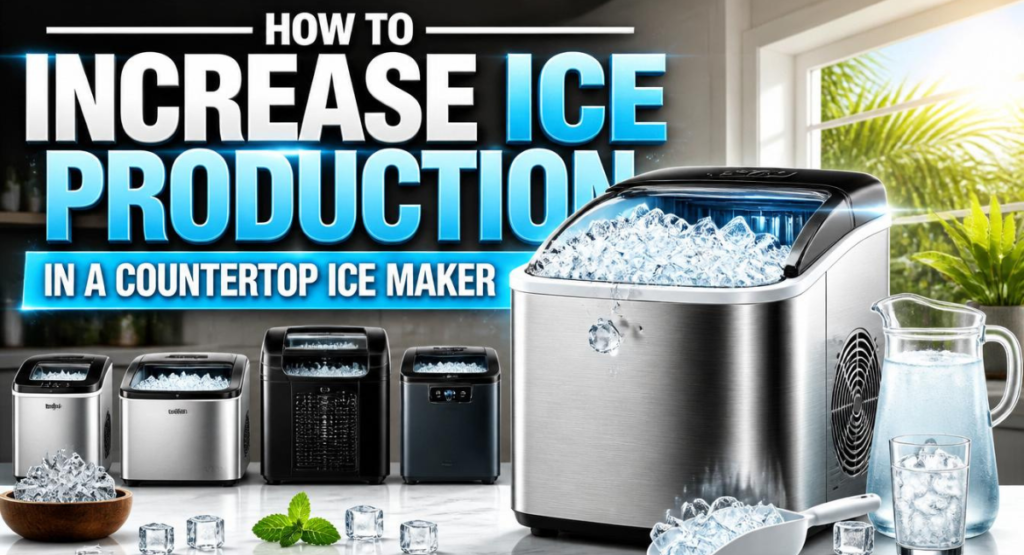
In this guide, you will learn exactly how to increase ice production in a countertop ice maker — 12 proven tips, from quick one-minute fixes to easy maintenance habits that keep your machine running at full speed for years.
Table of Contents
Let’s get into it.
Why Is Your Countertop Ice Maker Producing So Little Ice?
Before jumping into the fixes, it helps to understand why your machine slows down in the first place.
Countertop ice makers work by pumping water over metal freezing rods. When ice forms, the machine releases it into the storage bin and starts the next cycle. Sounds simple — but several factors can interrupt or slow down this process:
- High room temperature forces the compressor to work harder
- Warm water takes longer to freeze than cold water
- Mineral buildup on the freezing rods reduces efficiency
- Poor ventilation traps heat inside the machine
- Wrong settings mean slower, larger ice cubes per cycle
The fixes below target each of these causes directly.
12 Tips to Increase Ice Production in a Countertop Ice Maker
1. Use Cold or Chilled Water Instead of Tap Water
This is the single easiest way to speed up your ice production — and most people never think about it.
Room-temperature tap water takes significantly longer to freeze than pre-chilled water. Before filling the reservoir, refrigerate your water for 30 to 60 minutes, or use cold filtered water straight from the fridge.
Why it works: Your machine does not have to drop the water temperature from scratch. It starts the freezing process much faster, cutting cycle time by several minutes per batch.
Tip: Keep a pitcher of water in the fridge specifically for your ice maker. Refill it whenever you top up the reservoir.
2. Place the Machine in a Cool, Well-Ventilated Room
Where you put your countertop ice maker matters more than most people realize.
If your machine sits near a stove, in direct sunlight, next to a dishwasher, or in a warm corner of the kitchen, the surrounding heat forces the compressor to work overtime. The result? Slower cycles and less ice per hour.
What to do:
- Keep the machine away from heat sources like ovens, windows, and dishwashers
- Place it in the coolest part of your kitchen or countertop
- Never place it inside a cabinet or enclosed space
The ideal room temperature for a countertop ice maker is between 60°F and 75°F (15°C – 24°C). Every degree above that slows production.
3. Give the Machine Plenty of Breathing Room
Look at the back and sides of your countertop ice maker. Is it pushed up against a wall or squeezed between other appliances?
Ice makers generate heat during operation. They need to release that heat through ventilation vents — usually located on the sides or back of the unit. When these vents are blocked, heat builds up inside the machine, slowing the compressor and reducing ice output.
The fix is simple: Leave at least 5 to 6 inches of clearance on all sides of the machine. This small change can noticeably improve your ice production within the very first hour.
4. Select the Smaller Ice Cube Size Setting
Most countertop ice makers give you two or three ice cube size options — small, medium, and large.
Here is something most people do not know: smaller cubes freeze faster.
Smaller ice cubes have a higher surface-area-to-volume ratio, which means heat escapes more quickly during freezing. Your machine can complete more cycles per hour when making small cubes compared to large ones.
If you are not particular about cube size, switch to the small setting. You will get more ice in less time — simple as that.
5. Clean and Descale the Machine Regularly
This is the most overlooked reason for slow ice production — and one of the most impactful fixes.
Over time, minerals from your water supply (calcium, magnesium, and lime) build up on the freezing rods and inside the water lines. This mineral layer acts like insulation, making it harder and slower for the rods to freeze water efficiently.
How often to clean: Every 2 to 4 weeks depending on how hard your water is and how often you use the machine.
How to descale:
- Empty the water reservoir completely
- Mix equal parts white vinegar and water (or use a commercial descaling solution)
- Run a full cleaning cycle
- Drain and rinse the reservoir twice with fresh water
- Run one more cycle with clean water before making ice again
According to the NSF International guidelines on appliance hygiene, ice makers should be cleaned regularly to prevent mineral buildup and bacteria growth that reduce machine performance.
For a full step-by-step guide, check out our article on how to clean a portable ice maker at home.
6. Keep the Water Reservoir Full at All Times
Your countertop ice maker cannot make ice if it runs low on water. But there is a less obvious issue too — when the reservoir is only partially filled, the machine may pause or slow down as it waits for enough water to start the next cycle.
Best practice: Check the water level every time you take ice from the bin. Top it up before it gets below the halfway mark. This keeps production continuous and prevents unnecessary pauses between cycles.
7. Use Filtered or Purified Water
Tap water contains minerals, chlorine, and other impurities that slow down the freezing process and cause faster buildup on the internal components.
Filtered or purified water freezes more cleanly and efficiently. It also produces clearer, better-tasting ice — and significantly reduces how often you need to descale the machine.
If you use a Brita filter, pitcher filter, or reverse osmosis system at home, use that water in your ice maker. Your machine will run faster and last longer. The U.S. Geological Survey (USGS) explains how hard water minerals like calcium and magnesium build up inside appliances and reduce their efficiency over time — another strong reason to use filtered water whenever possible.
Related read: Can you use tap water in a portable ice maker?
8. Never Let Ice Pile Up in the Storage Bin
This one surprises people: a full ice bin actually stops your machine from making more ice.
Countertop ice makers have a sensor — either infrared or mechanical — that detects when the bin is full. When ice stacks up too high, the sensor triggers an automatic pause. The machine waits until ice melts down or you remove some before continuing.
The fix: Transfer ice from the bin to a separate freezer bag or insulated cooler regularly. This keeps the sensor clear and allows the machine to run continuously without interruptions.
9. Run the Machine Continuously, Not On and Off
Some people switch their countertop ice maker off between uses to save electricity. This seems smart, but it actually reduces your total ice output.
Every time you restart the machine, it takes several minutes to cool the system back down before it can begin freezing. If you are constantly turning it on and off, you lose a lot of production time to these warm-up periods.
Better approach: If you need ice throughout the day, leave the machine running. It is designed for continuous operation. Most countertop models consume between 120 and 200 watts — roughly similar to a light bulb — so the energy cost is minimal. You can verify typical appliance wattage using the U.S. Department of Energy appliance energy use guide to understand exactly how little your ice maker costs to run continuously.
10. Check for Ice Clumps and Clear the Bin
Ice cubes sometimes stick together in the storage bin, especially in humid conditions. When this happens, ice clumps can block the ejector arm that pushes fresh ice into the bin — causing the machine to stall mid-cycle.
What to do: Every time you check the water level, give the ice bin a quick look. If you see any clumps, break them apart or remove the excess. This keeps the ejector arm moving freely and prevents mid-cycle pauses.
11. Do Not Store the Machine in a Hot Garage or Outdoor Space
Many people move their portable ice maker to the garage, patio, or outdoor kitchen during parties and summer gatherings. This seems convenient — but hot outdoor temperatures can dramatically slow ice production or even cause the machine to overheat.
Most countertop ice makers are rated for indoor use in temperatures up to 90°F (32°C). Beyond that, the compressor struggles and ice output drops significantly.
If you need ice outdoors, make a batch inside first and transfer it to an insulated cooler. Or look for a model specifically rated for outdoor use.
12. Reset the Machine if Nothing Else Works
Sometimes your countertop ice maker just needs a fresh start. If you have tried the tips above and production is still sluggish, a full reset often clears minor sensor glitches or software errors that are slowing the machine down.
How to reset most countertop ice makers:
- Turn the machine off and unplug it from the wall
- Wait 5 to 10 minutes (this drains residual power and resets the sensors)
- Drain and clean the water reservoir
- Plug the machine back in, refill with fresh cold water, and restart
Most machines return to normal production speeds after a proper reset. If problems persist after trying all 12 tips, it may indicate a compressor or mechanical issue worth investigating further.
How Much Ice Should a Countertop Ice Maker Produce?
Waseem, I can see you pasted another section from your article. You want me to add your focus keyword naturally into that paragraph, right?
Here it is updated:
✅ Updated Section — Focus Keyword Added Naturally
A well-maintained countertop ice maker should produce between 26 and 35 pounds of ice per day under normal conditions (cool room temperature, clean water, proper ventilation). If you are still wondering how to increase ice production in a countertop ice maker, this number is your target benchmark.
If your machine is producing significantly less than this, one or more of the issues above is likely the cause. Work through the tips in order — starting with water temperature and placement, then moving to cleaning and settings.
Quick Reference: 12 Tips at a Glance
| Tip | Time to Fix | Difficulty |
|---|---|---|
| Use cold/chilled water | 1 minute | Very Easy |
| Move to a cooler location | 5 minutes | Easy |
| Improve ventilation clearance | 2 minutes | Very Easy |
| Select smaller ice cube size | 30 seconds | Very Easy |
| Clean and descale | 20–30 minutes | Easy |
| Keep reservoir full | 1 minute | Very Easy |
| Switch to filtered water | 1 minute | Very Easy |
| Transfer ice from bin regularly | 2 minutes | Very Easy |
| Run machine continuously | Ongoing habit | Very Easy |
| Clear ice clumps in bin | 1 minute | Very Easy |
| Avoid hot outdoor use | Ongoing habit | Easy |
| Reset the machine | 10 minutes | Easy |
Frequently Asked Questions
How long does it take a countertop ice maker to make one batch of ice?
Most countertop ice makers produce a batch of ice in 7 to 15 minutes, depending on the model, water temperature, room temperature, and ice cube size selected. Cold water and a cool room consistently give you the fastest cycle times.
Why does my countertop ice maker slow down in summer?
High summer temperatures force the compressor to work harder to maintain freezing temperatures. Keep the machine in an air-conditioned room, use cold water, and ensure proper ventilation to minimize the slowdown.
Does the quality of water affect ice production speed?
Yes. Hard tap water contains minerals that slow freezing and cause buildup on the freezing rods over time. Using filtered or purified water improves both speed and ice quality while reducing maintenance needs. For more on water quality and appliances, see the EPA drinking water quality guide.
How often should I descale my countertop ice maker?
Every 2 to 4 weeks for regular users, or whenever you notice slower production, smaller ice cubes, or cloudy ice. If you use hard tap water, descale more frequently.
Can I leave my countertop ice maker running all day?
Yes — countertop ice makers are built for continuous operation. Running it all day is perfectly safe and more efficient than repeated on/off cycles.
Why does my ice maker stop making ice when the bin is full?
This is normal and intentional. A built-in sensor detects when the bin is full and pauses production to prevent overflow. Transfer ice to a cooler or freezer bag regularly to keep the machine running.
Final Thoughts
Getting more ice from your countertop ice maker does not require any expensive repairs or technical skills. In most cases, a combination of cold water, proper placement, regular cleaning, and the right settings is all it takes to maximize your machine’s output.
Start with the easiest fixes first — cold water, ventilation clearance, and smaller cube size. These three alone can make a noticeable difference within the first hour.
For more tips on getting the most from your ice maker, browse our guides at icemakerreviews.com — your go-to resource for honest ice maker reviews, comparisons, and how-to guides.
Written by Waseem Khan | icemakerreviews.com