Introduction
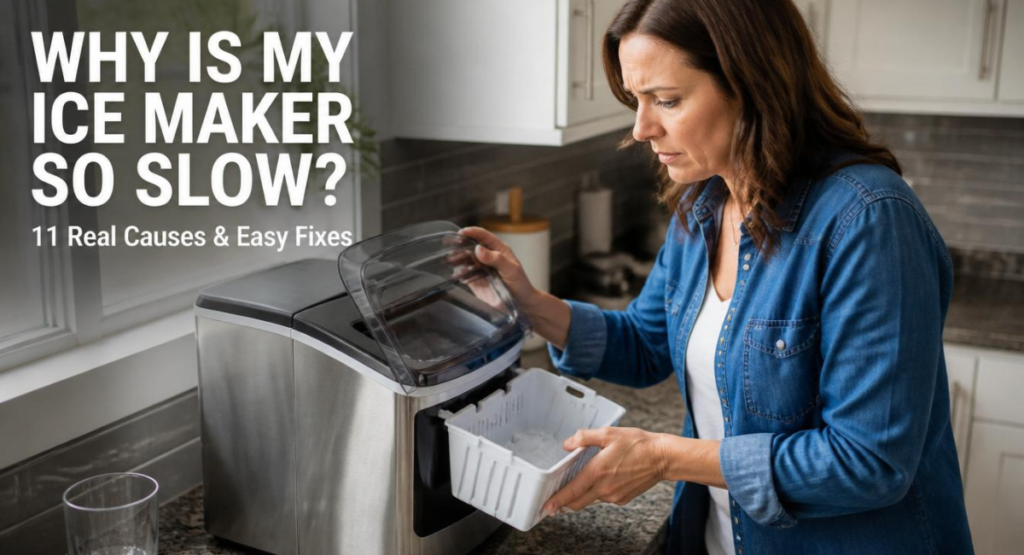
You filled the water tank, pressed the power button, and waited. And waited. And waited some more. If your ice maker is so slow that it barely keeps up with a single glass of iced tea — you’re not alone. This is one of the most common complaints from countertop and portable ice maker owners across the USA.
The good news? In most cases, a slow ice maker is 100% fixable at home without calling a technician or buying a new machine. In this guide, we’ll walk you through every possible reason why your ice maker is taking too long to make ice — and give you the exact fix for each one.
We tested and reviewed dozens of portable and countertop ice makers here at IceMakerReviews.com, so everything you read here comes from real hands-on experience.
Table of Contents
How Fast Should an Ice Maker Normally Work?
Before we troubleshoot, let’s set a baseline. If you don’t know what “normal” looks like, it’s hard to know if something is actually wrong.
Here is what you should expect from different types of home ice makers:
| Ice Maker Type | First Batch Time | Daily Ice Output |
|---|---|---|
| Bullet-style countertop | 6–10 minutes | 26–30 lbs/day |
| Cube-style countertop | 10–15 minutes | 30–40 lbs/day |
| Nugget ice maker | 7–12 minutes | 30–45 lbs/day |
| Built-in refrigerator ice maker | 90 minutes per cycle | 3–7 lbs/day |
| Under-counter ice maker | 12–20 minutes | 50–80 lbs/day |
Important note: The very first batch always takes longer because the machine and water both start at room temperature. After two or three cycles, things stabilize and ice production gets faster. If your machine is still slow after the first few cycles, one of the 11 causes below is responsible.
11 Reasons Why Your Ice Maker Is So Slow (And How to Fix Each One)
1. The Room Temperature Is Too Hot
This is the single biggest reason why countertop and portable ice makers slow down — and most people never think about it.
Ice makers work by running a refrigerant through coils to freeze water. When the room temperature is high, the machine has to work much harder to pull heat away from the water. Every extra degree of ambient heat adds time to each ice-making cycle.
The ideal operating temperature for most portable ice makers is between 50°F and 80°F (10°C–27°C). Once your room climbs above 85°F, cycle times can more than double.
Fix: Move your ice maker to a cooler part of the kitchen. Keep it away from the stove, oven, direct sunlight, or other heat-producing appliances. If you’re using it outdoors in summer heat, expect it to run slower — this is completely normal. See our full section on ice maker slow in summer heat below.
2. Poor Ventilation Around the Machine
Your ice maker vents hot air while it works. If that hot exhaust has nowhere to go — like when the machine is stuffed into a cabinet, pressed against a wall, or surrounded by other items — it just recirculates back into the machine. This is called heat recirculation, and it kills ice-making speed.
Fix: Give your machine breathing room. Leave at least 4–6 inches of open space on all sides and especially at the back. Never operate it in a fully enclosed cabinet. Even small placement changes can cut cycle times significantly.
3. Warm Water in the Reservoir
Many people fill their ice maker straight from a warm tap. Since ice makers need to freeze the water, starting with warm water means the machine has to do more work before ice can even begin to form.
Fix: Use cold water from the refrigerator or let tap water chill for 10–15 minutes before pouring it in. This one simple change can speed up your first several batches noticeably. This is especially helpful if you’re wondering how to make your ice maker faster with zero cost or effort.
4. The Ice Maker Needs Cleaning (Mineral Buildup)
If you use tap water regularly, minerals like calcium and magnesium slowly build up on the evaporator rods and inside the water lines. This mineral scale acts like an insulating layer — it blocks heat from transferring efficiently, which means water takes longer to freeze.
Signs you have mineral buildup: cloudy ice, white chalky residue inside the tank, or cycles getting slower over time.
Fix: Run a cleaning and descaling cycle. Most ice makers have a built-in self-cleaning mode. You can also use a food-safe descaling solution (or white vinegar diluted with water) to break down mineral deposits. Rinse thoroughly afterward. We recommend cleaning your ice maker every 4–6 weeks if you use tap water.
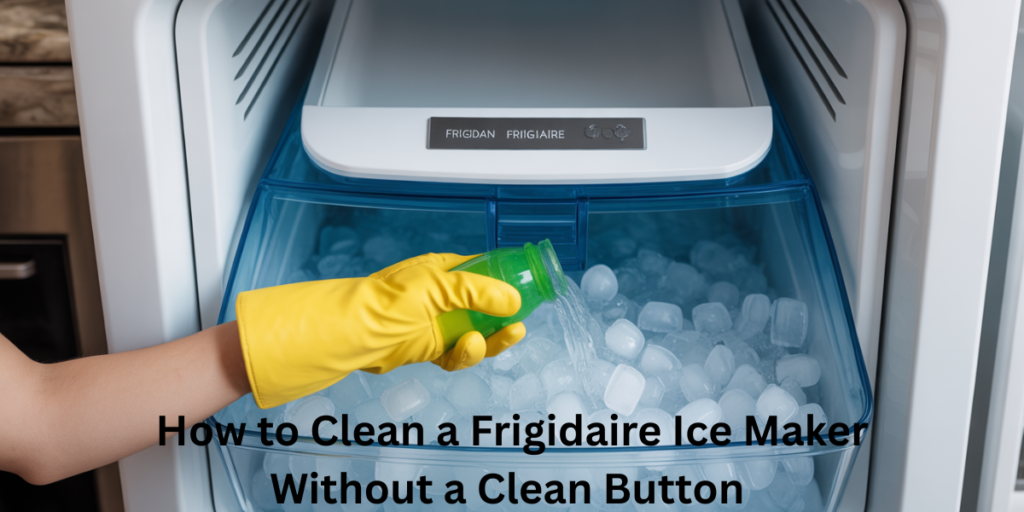
For a complete guide, see our article: How to Clean a Frigidaire Ice Maker With Vinegar
5. The Water Reservoir Is Too Low
Some ice makers slow down or pause cycles automatically when the water level drops below a certain threshold. Others keep making ice but produce smaller, oddly-shaped cubes when water is low.
Fix: Always keep the water reservoir filled to the recommended level (usually marked inside the tank). Refill it as soon as the low-water indicator light comes on.
6. The Ice Basket Is Nearly Full
All portable and countertop ice makers have a full-ice sensor (usually an infrared sensor or a physical arm). When ice gets too close to the sensor, the machine automatically pauses production — even if there’s still water in the tank. If you’re peeking at the machine and it looks like it’s barely making any ice, a nearly-full basket could be the reason.
Fix: Empty the ice basket more frequently. If you’re making ice for a party, dump the ice into a cooler or insulated bucket to keep making room. Also, wipe the sensor lens with a clean cloth — ice splatter or frost can trigger false “full” readings.
7. You’re Using Hard Water
Hard water (water with high mineral content) is a double problem. First, it leads to the mineral buildup described above. Second, minerals actually raise the freezing point of water slightly and interfere with the refrigerant cycle efficiency over time.
The USA has notoriously hard water in many regions — including Texas, Arizona, Florida, and the Midwest.
Fix: Switch to filtered water or use a water pitcher with a built-in filter before filling your ice maker. You’ll immediately notice clearer ice, faster cycles, and less mineral deposits inside the machine. This is one of the easiest answers to the question why does my ice maker take so long — the water itself.
8. Dirty or Blocked Condenser Coils
Built-in refrigerator ice makers (and some large under-counter models) rely on the fridge’s condenser coils to reject heat. If those coils are caked with dust and pet hair, heat can’t escape efficiently — and the entire cooling system slows down, including ice production.
Fix: Unplug the refrigerator, pull it away from the wall, and vacuum the condenser coils with a brush attachment. Do this every 6–12 months. For countertop machines, vacuum any visible vent openings to remove dust.
9. Ice Cube Size Is Set Too Large
Many ice makers let you choose between small, medium, and large ice cubes (or thin vs. thick). Larger and thicker ice takes significantly longer to freeze because more water needs to solidify around each rod.
Fix: If you need ice fast, select the “small” or “thin” setting. You’ll get ice in nearly half the time. This is one of the fastest answers to how to speed up a countertop ice maker immediately.
10. The Machine Hasn’t Been Reset
Like all electronics, ice makers can get stuck in a slow or confused state due to minor software glitches or sensor errors. A machine that “works” but seems unusually slow is often just in need of a restart.
Fix:
- Power off the machine completely
- Unplug it from the wall
- Empty the water reservoir and ice basket
- Wait 60 seconds
- Refill with cold filtered water
- Power back on and run two full cycles before judging speed
This simple power cycle fixes the problem more often than you’d expect.
11. The Ice Maker Is Aging or Has a Mechanical Issue
If your ice maker is 3–5+ years old and has slowed down significantly despite all the above fixes, wear and tear may be the culprit. The compressor efficiency decreases over time, refrigerant can gradually leak from older machines, and water pump performance degrades.
Other signs of a mechanical issue: the machine is louder than it used to be, it’s making ice only every hour or two, or cycles seem to run but produce very little ice.
Fix: At this point, repair may cost more than replacement. See our When to Replace section below, and check out our Best Portable Ice Makers of 2026 for tested recommendations.
How to Speed Up Your Ice Maker — 7 Quick Wins
Want faster ice right now? Here are the 7 most effective things you can do today to make your ice maker produce more ice:
- Use cold filtered water — reduces freeze time per cycle
- Move the machine away from heat sources — stoves, windows, and other appliances
- Select a smaller ice size setting — thin ice freezes much faster than thick
- Leave 4–6 inches of clearance on all sides — stops hot exhaust from recycling
- Clean and descale the machine — removes mineral insulation from internal parts
- Empty the basket frequently — prevents the sensor from pausing production
- Reset the machine with fresh cold water — clears any electronic confusion
Doing even two or three of these together can cut cycle times by 30–50%. Most countertop ice maker owners report going from 14-minute cycles down to 8-minute cycles just by switching to cold filtered water and improving airflow.
Why Is My Portable Ice Maker Slow? (Special Section)
Portable ice makers have a few unique vulnerabilities that built-in refrigerator ice makers don’t face. If you’re specifically wondering why your portable ice maker is slow, here are the most common causes:
Portables Are More Sensitive to Heat
Because portable machines are compact, their condensers are smaller and have less cooling capacity than built-in refrigerator units. This makes them more sensitive to high ambient temperatures. A portable ice maker that works great in an air-conditioned kitchen may struggle significantly in a hot garage or outdoor patio.
Portables Depend Entirely on the Water You Give Them
Unlike built-in refrigerator ice makers that connect to a water line, portables rely on what you manually pour into the reservoir. Warm water, mineral-heavy water, or stale water sitting in the tank all drag performance down. Always start with fresh, cold, filtered water for the fastest results.
Portables Need to Be Level
Many portable ice makers require a level surface to function correctly. If the machine is tilted, the water pump can’t draw water properly, coolant may not flow as designed, and cycle times increase. Always use a flat, stable surface.
For our full guide on the fastest portable ice makers on the market, visit: Best Countertop Nugget Ice Maker
Ice Maker Slow in Summer Heat? Here’s What’s Happening
Summer is peak complaint season for slow ice makers — and it’s no mystery why. When outdoor temperatures climb above 90°F and kitchens heat up to 85°F or more, even a brand-new machine will run noticeably slower. This is not a defect — it’s physics.
Here’s what summer heat does to your ice maker:
- The compressor has to work much harder to reject heat into an already-hot environment
- Cycle times increase because freezing takes longer when the ambient temperature is high
- Daily output can drop by 20–40% on extremely hot days compared to winter performance
- The machine may run almost continuously without filling the bin
How to Handle a Slow Ice Maker in Summer
- Run the ice maker in the coolest room in the house
- Use it during cooler hours (early morning, evening) for maximum output
- Pre-fill with water from the refrigerator, not the tap
- Make sure ventilation is optimal — summer heat makes airflow even more critical
- Consider making ice overnight and storing it in a sealed container
If you’re asking about a portable ice maker slow fix for summer 2026, the answer is mostly about placement and water temperature — both of which are within your control.
When Is an Ice Maker Too Slow to Fix?
Sometimes, the honest answer is that it’s time for a new machine. Here are the signs that repairs won’t help your slow ice maker:
- The machine is 3+ years old and none of the above fixes improved speed
- It’s making ice only once every hour or two despite clean water and good ventilation
- Ice cubes are consistently small, hollow, or malformed even on large setting
- The machine is louder than usual — clicking, grinding, or rattling sounds suggest compressor problems
- The machine cycles correctly but produces no ice — refrigerant may have leaked
If your machine shows two or more of these signs, replacement is likely the most cost-effective path. The good news: a quality countertop ice maker now costs as little as $85–$130, and performance has improved dramatically in the past two years.
See our expert picks: Best Countertop Ice Maker with Water Line for Home 2026
Frequently Asked Questions About Slow Ice Makers
How long should an ice maker take to make one batch of ice?
A standard countertop or portable bullet-style ice maker should produce its first batch in 6–10 minutes under normal indoor conditions (room temperature around 70°F, cold water in the reservoir). Cube-style machines take 10–15 minutes. Built-in refrigerator ice makers take significantly longer — typically 90 minutes per cycle — because they operate differently. If your machine is taking more than 20 minutes per batch indoors with cold water, one of the causes listed above is likely responsible.
Why is my new ice maker so slow?
A brand-new ice maker being slow is almost always caused by one of three things: room temperature is too hot, the water you’re using is too warm, or the machine needs 2–3 warm-up cycles before it reaches peak performance. The very first cycle is always slower because the internal components start at room temperature. Give it 3–4 complete cycles before judging its speed. If it’s still slow after that, check ventilation and water temperature.
Does hot weather make ice makers slower?
Yes, significantly. Ice makers work harder in hot environments because they must reject heat into already-warm air. Most portable and countertop ice makers are rated for indoor use at temperatures up to 85°F. Above that threshold, cycle times increase noticeably and daily output can drop by 20–40%. If you’re using your ice maker during summer heat, use cold filtered water, maximize ventilation, and run it during cooler parts of the day for best results.
How do I make my ice maker produce more ice per day?
To maximize daily ice output: use cold filtered water, choose the small ice size setting (thinner ice freezes faster), ensure at least 4–6 inches of clearance on all sides for ventilation, keep the machine in a cool room (under 75°F if possible), clean and descale it regularly to prevent mineral buildup, and empty the basket frequently so the full-ice sensor doesn’t pause production. Done together, these steps can increase daily output by 30–50% compared to a poorly-maintained, poorly-placed machine.
Can a dirty ice maker make ice slower?
Absolutely. Mineral scale from hard water builds up on the evaporator rods and water pathways inside the machine over time. This scale acts like insulation — it prevents heat from transferring efficiently between the refrigerant and the water, which means each cycle takes longer. If your machine has been running on tap water for months without cleaning, descaling it could noticeably restore speed. A thorough cleaning every 4–6 weeks is the best preventive measure.
Why does my ice maker only make ice at night?
This is a classic summer heat problem. If your kitchen or room is significantly cooler at night than during the day, your ice maker naturally performs better at night when the ambient temperature drops. The machine is fighting less heat, so cycles are shorter and ice production is faster. If this describes your situation, try running the ice maker in a cooler room or using it during evening hours for better results.
My ice maker is making ice every hour — is that normal?
No, that’s too slow for a countertop or portable unit. A healthy machine should complete a cycle every 6–15 minutes, not every hour. If yours is only making ice once an hour, check for: heavy mineral buildup, extreme heat around the machine, warm water in the reservoir, a nearly-full ice basket pausing production, or possible compressor problems. Work through the 11 causes listed above to identify the specific issue.
Final Thoughts: Why Is My Ice Maker So Slow?
In 9 out of 10 cases, a slow ice maker comes down to heat, water, or maintenance. Before you assume the machine is broken, work through this checklist:
- Is the room temperature above 80°F? → Move it somewhere cooler
- Is there adequate clearance around the machine? → Give it 4–6 inches on all sides
- Are you using warm or mineral-heavy water? → Switch to cold filtered water
- When did you last clean and descale it? → Do it if it’s been more than 6 weeks
- Is the ice basket nearly full? → Empty it more often
- Is the ice size set to large? → Switch to small for faster cycles
- Have you tried a full reset? → Unplug, drain, refill, restart
If you’ve worked through all of these and your machine is still too slow, it may be time for a replacement. Check out our hands-on tested reviews to find the fastest countertop ice maker for your needs.
Related articles you’ll find helpful:
- Best Countertop Ice Maker with Water Line for Home 2026
- Can You Leave a Portable Ice Maker On All Night?
- Ice Maker Not Making Ice? 9 Causes and Fixes
- Samsung Ice Maker Problems: Common Issues and Solutions
Sources and further reading: U.S. Department of Energy — Refrigerator and Freezer Tips | Consumer Reports — Ice Maker Buying Guide