Introduction
Your Igloo ice maker works hard every single day. It produces batch after batch of fresh ice — but here is the truth most people do not know: without regular cleaning, that same machine starts producing ice that smells bad, tastes like plastic or mildew, and may even carry harmful bacteria.
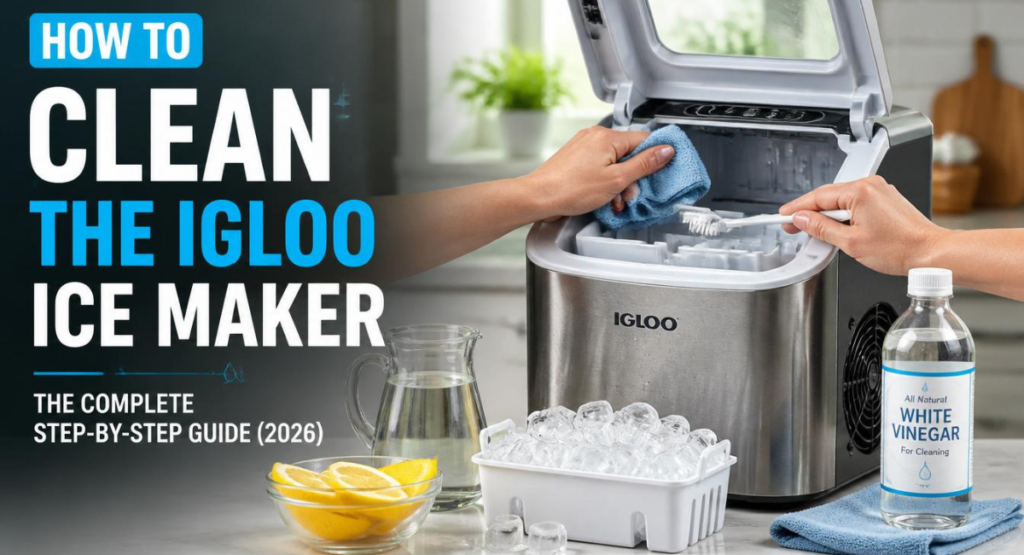
Learning how to clean the Igloo ice maker the right way is not complicated. It takes about 20–30 minutes, a few household supplies, and a simple routine. Do it right and your machine will keep making clean, fresh, great-tasting ice for years.
This guide covers everything — the full deep-clean process, the quick weekly clean, how to descale mineral buildup, how to remove mold, and the exact cleaning schedule your Igloo ice maker needs to stay in top shape.
Table of Contents
Why Cleaning Your Igloo Ice Maker Is Non-Negotiable
Most people clean their ice maker only when something goes wrong — the ice smells funny, production slows down, or they spot something dark inside the machine. By that point, the damage is already done.
Here is what actually builds up inside a dirty Igloo ice maker:
- Mineral deposits from tap water coat the water lines, evaporator pins, and internal tubing. This reduces ice production speed and shrinks ice cube size over time.
- Mold and mildew thrive in the warm, moist interior of any ice maker that sits unused or is not cleaned regularly. Mold produces ice that smells musty and tastes terrible.
- Bacteria and biofilm grow on surfaces that stay damp. The water reservoir is a breeding ground if left unattended.
- Slime buildup forms inside the water pump and circulation lines, eventually clogging them entirely.
Regular cleaning prevents all of this. It keeps your ice tasting fresh, your machine running at full output, and your family or customers safe.
How Often Should You Clean Your Igloo Ice Maker?
The right cleaning frequency depends on how much you use the machine and how hard your tap water is. Here is the recommended schedule:
Weekly Maintenance
- Wipe down the exterior with a damp cloth
- Empty and rinse the water reservoir
- Discard any ice that has been sitting for more than 24 hours
Every 2 Weeks (Regular Use)
- Full interior clean with vinegar and water solution
- Clean the ice bin and ice scoop
- Wipe all interior surfaces
Monthly (Heavy Use or Hard Water Areas)
- Full deep clean including descaling
- Check water lines for mineral buildup
- Inspect the evaporator pins for scale deposits
Every 3 Months
- Full descaling cycle
- Clean the air vents and condenser area
- Check all gaskets and seals
If you notice any of these signs, clean your Igloo ice maker immediately, regardless of schedule:
- Ice tastes or smells unusual
- Ice cubes are smaller than normal
- The machine is making more noise than usual
- You see any dark spots or discoloration inside
- Ice production has slowed down noticeably
What You Need to Clean an Igloo Ice Maker
Before you start, gather everything you need. Having supplies ready makes the process faster and easier.
Cleaning Supplies
- White distilled vinegar (standard 5% acid — available at any grocery store)
- Fresh water (filtered water is ideal)
- Mild dish soap (fragrance-free recommended)
- Soft cloths or microfiber towels
- Soft-bristle brush or old toothbrush
- Bottle brush (for reaching inside water lines)
- Small bowl or container
Optional but Helpful
- Igloo-approved ice machine cleaner (available online — follow manufacturer dilution instructions)
- Food-grade hydrogen peroxide (3% solution) for stubborn mold
- Lemon juice (natural alternative to vinegar for light cleaning)
What NOT to Use
- Bleach — too harsh, damages internal components, leaves dangerous residue
- Abrasive scrubbing pads — scratches surfaces and creates grooves where bacteria hide
- Steel wool — causes rust and surface damage
- Harsh chemical cleaners not approved for food equipment
- Paper towels for scrubbing — they leave lint inside the machine
How to Clean the Igloo Ice Maker: Full Step-by-Step Guide
This is the complete cleaning process for your Igloo countertop ice maker. Follow every step in order for the best results.
Step 1: Unplug the Machine and Let It Sit
Safety comes first. Before you touch anything inside the machine, unplug the Igloo ice maker from the wall outlet. Do not skip this step — water and electricity together create a serious hazard.
After unplugging, leave the machine to sit for 5 minutes. This lets the internal components cool down and any ice that is currently forming to melt naturally.
Step 2: Remove All Ice and Empty the Water Reservoir
Open the ice maker lid and remove all ice from the storage bin. Discard every piece — do not use ice that was in the machine during cleaning.
Next, drain the water reservoir completely. Most Igloo models have a drain plug at the bottom or back of the machine. Remove the plug and let all the water drain out into a sink or bucket. Once fully drained, replace the drain plug securely.
Step 3: Remove the Ice Bin and Ice Scoop
Lift the ice bin out of the machine. On most Igloo models, this lifts straight up or slides out at a slight angle — check your specific model manual if it does not come out easily. Never force it.
Take the ice scoop out as well. Both the ice bin and scoop need to be washed separately.
Wash the ice bin and scoop with warm water and a small amount of mild dish soap. Rinse thoroughly until no soap residue remains. Set them aside on a clean towel to air dry completely before putting them back.
Step 4: Prepare Your Vinegar Cleaning Solution
Mix a solution of equal parts white distilled vinegar and fresh water. For a standard Igloo countertop ice maker, 16 oz of vinegar mixed with 16 oz of water is the right amount.
White vinegar is the safest, most effective cleaning agent for portable ice makers. The mild acid dissolves mineral deposits, kills most bacteria and mold spores, and leaves no harmful residue once rinsed properly. It is food-safe, inexpensive, and available everywhere.
If your machine has heavy mineral buildup, you can use a slightly stronger ratio — 2 parts vinegar to 1 part water. For light regular cleaning, a 1:1 ratio is perfect.
Step 5: Clean the Interior Surfaces
Dip a soft cloth or microfiber towel into the vinegar solution and wipe down every interior surface you can reach. Pay special attention to:
- The walls of the water reservoir
- The area beneath where the ice bin sits
- The ice chute where cubes drop into the bin
- The underside of the lid
- Any grooves, corners, or textured surfaces where buildup collects
For tight corners and hard-to-reach areas, use a soft-bristle brush or old toothbrush dipped in the vinegar solution. Scrub gently — you want to loosen deposits, not scratch the surface.
If you spot any black or dark green spots, these are likely mold. Apply a small amount of undiluted white vinegar directly to the spot, let it sit for 5 minutes, then scrub with the toothbrush. For stubborn mold, use a 3% food-grade hydrogen peroxide solution — apply, wait 5 minutes, then wipe clean.
Step 6: Run the Vinegar Solution Through the Machine
Pour the remaining vinegar and water solution into the water reservoir. Plug the machine back in and run it through a complete ice-making cycle. This allows the cleaning solution to circulate through the internal water lines, pump, and evaporator — cleaning parts you cannot reach by hand.
Let the machine run until it produces a batch of ice. Discard this ice immediately — do not eat or use it. It contains the cleaning solution and any dissolved mineral deposits from inside the machine.
After the cycle completes, unplug the machine again and drain the reservoir completely.
Step 7: Run Two Full Rinse Cycles with Fresh Water
This step is critical and one that most cleaning guides skip over too quickly. Vinegar residue inside the machine will make your ice taste sour if you do not rinse thoroughly.
Fill the reservoir with fresh clean water — filtered water is best. Plug in the machine and run a full cycle. Discard all the ice produced. Drain the reservoir.
Repeat this process a second time with fresh water. After two full rinse cycles, there will be no vinegar taste or smell left in the machine.
If you want to be completely certain, taste a small piece of ice from the third cycle. It should taste completely clean and neutral. If any vinegar taste remains, run one more rinse cycle.
Step 8: Clean the Exterior
While the machine drains between rinse cycles, clean the outside. Mix a small amount of mild dish soap with warm water. Dip a soft cloth in the soapy water and wipe down all exterior surfaces — the top, sides, front panel, buttons, and display.
For the air vents on the back or sides of the machine, use a dry soft-bristle brush to remove dust buildup. Blocked air vents reduce cooling efficiency and slow down ice production, so keep them clear.
Dry all exterior surfaces with a clean dry cloth.
Step 9: Dry Everything and Reassemble
Before putting the ice bin back, make sure it is completely dry. Any moisture left in the bin encourages mold growth. Use a clean dry cloth to wipe the interior of the bin, then leave it out for another few minutes to air dry fully.
Once everything is dry, slide the ice bin back into place, replace the ice scoop, and close the lid. Your Igloo ice maker is now clean, sanitized, and ready to make fresh ice.
Step 10: Run One Final Ice Cycle Before Use
Plug the machine in and run one complete ice-making cycle. Check the ice — it should be clear, odor-free, and taste completely neutral. If everything looks and tastes clean, your machine is ready for regular use.
If you notice any remaining odor, run one more rinse cycle and repeat the ice taste test.
How to Deep Clean and Descale an Igloo Ice Maker
If your Igloo ice maker has not been cleaned in a long time or you live in an area with hard water, mineral scale will have built up significantly inside the machine. Regular vinegar cleaning helps, but a proper descaling process removes heavy buildup that a standard clean cannot reach.
Signs You Need to Descale
- Ice cubes are noticeably smaller than they used to be
- The machine takes longer to complete a cycle than it used to
- You can see white or grey crusty deposits on the evaporator pins or inside the reservoir
- Water flow seems slower than normal
- The machine makes a grinding or straining noise during operation
How to Descale Your Igloo Ice Maker
Option 1 — White Vinegar Descaling (Best for Moderate Buildup)
Use a stronger vinegar solution — 2 parts white vinegar to 1 part water. Pour into the reservoir and let it soak for 30 minutes without turning the machine on. This extended soak time allows the acid to penetrate and dissolve heavy mineral deposits. After soaking, run a full cycle, discard the ice, drain, and rinse with two full cycles of clean water.
Option 2 — Commercial Ice Machine Cleaner (Best for Heavy Buildup)
Products like Affresh Ice Machine Cleaner or Nickel Safe Ice Machine Cleaner are specifically formulated to dissolve mineral deposits without damaging internal components. Follow the package instructions — typically you add the tablet or liquid to the reservoir, run a cleaning cycle, then rinse twice with fresh water.
Always use a cleaner that is explicitly labeled as safe for portable ice makers. Never use industrial descaling chemicals on a countertop ice machine.
Option 3 — Lemon Juice Solution (Light Buildup Only)
For very light mineral buildup, equal parts fresh lemon juice and water makes an effective natural descaling solution. It is gentler than vinegar and leaves a pleasant scent. Use the same process as the vinegar method — fill, run a cycle, discard ice, drain, and rinse twice.
How to Clean a Portable Igloo Ice Maker After Storage
If your Igloo ice maker has been stored away for weeks or months — after camping, a summer event, or seasonal use — it needs a full cleaning before you use it again, even if you cleaned it before storing it.
Moisture trapped inside during storage promotes mold and mildew growth. Dust and debris settle on interior surfaces. Follow these steps before running your first ice cycle after storage:
- Wipe all exterior surfaces with a damp cloth to remove dust
- Check the interior for any visible mold, dark spots, or unusual smell
- If mold is present, apply undiluted white vinegar to affected areas, wait 10 minutes, then scrub and wipe clean
- Run a full vinegar cleaning cycle as described in Steps 4–7 above
- Run two fresh water rinse cycles
- Taste test the ice before consuming
Never store your Igloo ice maker with water inside the reservoir. Always drain and dry completely before storing. Leave the lid slightly open during storage to allow air circulation and prevent mold growth inside the machine.
How to Use the Igloo Ice Maker Self-Cleaning Function
Many newer Igloo models include a built-in self-cleaning function. This is a convenient feature, but it is important to understand what it does — and what it does not do.
What the Self-Clean Function Does
The self-cleaning cycle circulates water through the internal components to flush out loose deposits and rinse the water lines. It is designed for routine maintenance between full manual cleans.
What It Does NOT Do
The self-clean function does not scrub interior surfaces, remove stubborn mineral scale, clean the ice bin, or eliminate heavy mold buildup. It is a maintenance tool — not a replacement for a proper full clean.
How to Use It
- Empty the ice bin and reservoir completely
- Fill the reservoir with a vinegar and water solution (1:1 ratio) OR plain fresh water for a basic rinse
- Press and hold the Clean button (usually 3–5 seconds) until the cleaning cycle begins
- The cycle typically runs for 20–30 minutes
- Drain the reservoir after the cycle completes
- Run one fresh water rinse cycle
Use the self-clean function every 1–2 weeks for regular maintenance. Still perform a full manual deep clean every month.
Troubleshooting: Common Problems After Cleaning
Ice Still Smells or Tastes Bad After Cleaning
You may not have rinsed thoroughly enough. Run two more full cycles with fresh filtered water. If the problem persists, the smell may be coming from old water in the drain line — drain completely, let the machine dry for 2 hours with the lid open, then try again.
Ice Maker Not Producing Ice After Cleaning
Check that the drain plug is fully secured in place. A slightly loose drain plug causes water to drain before the machine can make ice. Also confirm the machine is fully plugged in and the water reservoir is filled to the minimum line.
Machine Making Unusual Noise After Cleaning
A small amount of air in the water lines after cleaning is normal and usually resolves after the first 1–2 cycles. If noise persists beyond that, check that the machine is sitting on a level surface and that no internal components were accidentally dislodged during cleaning.
Water Leaking From the Bottom
The drain plug may not be seated properly. Unplug the machine, remove and reinsert the drain plug firmly, and try again. If leaking continues, inspect the plug seal for damage.
Ice Cubes Are Cloudy After Cleaning
Cloudy ice is usually caused by mineral content in your tap water — not a cleaning issue. Switch to filtered water or bottled water to produce clearer ice cubes.
Best Practices to Keep Your Igloo Ice Maker Clean Longer
A few simple habits will dramatically reduce how often you need to deep clean your machine and keep the ice tasting fresh every day.
Always use filtered water. Tap water contains minerals, chlorine, and other impurities that build up inside the machine over time. Filtered or purified water makes cleaner-tasting ice, reduces mineral scale, and extends the time between required deep cleans.
Never leave water sitting in the reservoir. If you are not using the machine for more than 24 hours, drain the reservoir. Stagnant water is where bacteria and biofilm start forming.
Discard ice after 24 hours. Ice absorbs odors from the surrounding environment. Even clean ice starts picking up freezer smells after sitting overnight. Dump old ice, rinse the bin, and start fresh.
Keep the lid closed when not in use. An open lid invites dust, airborne particles, and insects into the machine.
Store clean and dry. Before putting the machine away for any extended period, run a full cleaning cycle, drain completely, wipe dry, and store with the lid slightly ajar.
Clean the ice scoop every time. The scoop touches every batch of ice you make. Wash it with soap and water after every use — just like any food utensil.
Frequently Asked Questions About Cleaning an Igloo Ice Maker
Can I put the ice bin in the dishwasher?
Most Igloo ice maker bins are top-rack dishwasher safe, but check your specific model manual to confirm. Hand washing with mild dish soap and warm water is always the safest option and will extend the life of the bin.
How do I clean the countertop ice maker water lines?
Running vinegar solution through a full ice-making cycle is the most effective way to clean the internal water lines. The solution circulates through the pump, water lines, and evaporator, dissolving mineral deposits as it travels.
Why does my Igloo ice maker smell even after cleaning?
The most common cause is residual moisture inside the machine that was not fully dried before the lid was closed. After cleaning, leave the lid open for 30–60 minutes to let the interior air dry completely before closing it up.
How do I clean an Igloo ice machine without vinegar?
You can use a commercial ice machine cleaner tablet or liquid, or a mild solution of dish soap and warm water for the interior surfaces. For the water cycle, use an approved food-safe ice machine cleaner. Lemon juice diluted with water also works for light cleaning.
How do I clean my Igloo ice maker if it has mold?
Apply undiluted white vinegar directly to the moldy area and let it sit for 5–10 minutes. Scrub with a soft toothbrush, wipe clean, then run a full vinegar cleaning cycle through the machine. Rinse twice with fresh water before making ice.
What is the best way to clean a portable ice maker?
The best way to clean a portable ice maker is with a 1:1 solution of white distilled vinegar and water. Wipe all interior surfaces by hand, then run the solution through a full cycle, discard the ice, drain, and rinse twice with fresh water.
Can I use bleach to clean my Igloo ice maker?
No. Bleach is too harsh for portable ice makers. It damages internal plastic components, degrades seals and gaskets, and leaves toxic residue that is very difficult to rinse out completely. Always use white vinegar, mild dish soap, or an approved ice machine cleaner.
How often should I clean my Igloo ice maker?
For regular use, do a full clean every 2 weeks and a deep descaling clean every month. If you use it daily or have hard tap water, clean it every week.
Final Thoughts: Keep It Clean, Keep It Fresh
Knowing how to clean the Igloo ice maker properly is the single most important thing you can do to extend its lifespan and protect the quality of the ice it produces. A clean machine makes better ice, runs more efficiently, lasts longer, and gives you complete peace of mind that what you are putting in your drinks is safe and fresh.
The process is simple: unplug, empty, clean with vinegar solution, run a cycle, rinse twice, dry, and reassemble. Do it every two weeks and you will never deal with bad-tasting ice, sluggish production, or mold again.
Make cleaning your Igloo portable ice maker part of your regular kitchen routine — and it will reward you with clean, fresh, perfectly sized ice every single time.