Introduction
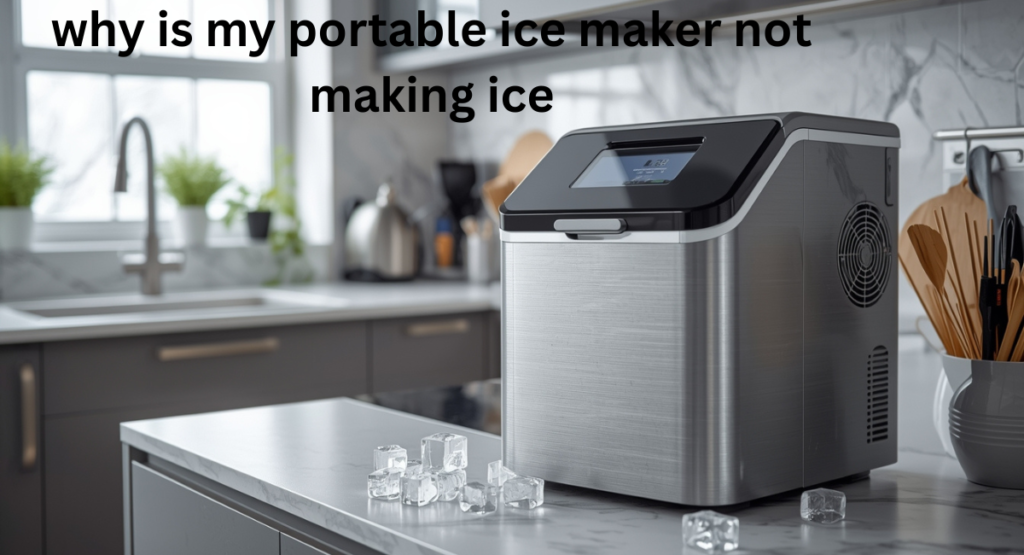
Why is my portable ice maker not making ice when it is running, humming, but producing nothing? You reach for ice, and your portable ice maker is just sitting there — running, humming, doing nothing. No ice. Maybe the “Add Water” light is on even though the reservoir is full. Maybe it sounds like it is about to work, then suddenly stops. Or maybe it simply will not turn on at all.
This guide covers every reason why a portable ice maker stops making ice and every fix that actually works. We cover countertop models, small countertop units, Frigidaire portables, Orgo ice makers, commercial ice machines, and more — all for US owners. By the end of this page, your machine will either be working again, or you will know exactly what is wrong with it.
Table of Contents
1. How a Portable Ice Maker Actually Works
Before troubleshooting, it helps to understand the process so you can pinpoint exactly where it breaks down. Here is how every portable ice maker makes ice:
- Water from the reservoir is pulled up by the water pump into the ice-making tray.
- The compressor pumps refrigerant through the evaporator (freezing rods or plate), dropping the temperature rapidly.
- The cooling fan circulates air over the condenser coils, releasing heat from the refrigerant.
- Water around the freezing rods turns to ice. This typically takes 6 to 15 minutes per cycle.
- The rods briefly warm up, the ice releases, drops into the storage bin, and the cycle restarts.
- A sensor or float detects when the bin is full and pauses production.
If any single part of this chain fails — power, water supply, pump, compressor, fan, sensor — your machine stops making ice. The 12 fixes below address each failure point directly.
2. 2-Minute Quick-Fix Checklist
Try these five things first. They solve over 60% of portable ice maker problems without any further troubleshooting:
- Unplug the machine, wait 60 seconds, plug it back in (resets the control board)
- Check the water reservoir — fill it to the MAX line with fresh water
- Make sure the lid is fully closed (many models will not run with an open lid)
- Confirm the room temperature is between 50°F and 90°F
- Empty the ice bin if it is full — the sensor shuts off production automatically
If none of those work, continue to the full diagnosis below.
3. 12 Reasons Your Portable Ice Maker Is Not Making Ice — and How to Fix Each One
Easy Fix 1. No Power or Incorrect Power Supply
Symptoms: The machine will not turn on, no indicator lights, completely dead.
Causes:
- The power cord is not fully plugged in
- The outlet is a GFCI outlet that has tripped (very common in kitchens)
- A tripped circuit breaker
- Damaged or frayed power cord
- An extension cord that is not rated for the machine’s wattage
Fix: First, press the RESET button on the outlet itself (it is the small button between the two plug slots on GFCI outlets). Try plugging the ice maker into a different outlet — preferably one that is not GFCI. If using an extension cord, plug directly into the wall instead. Inspect the power cord for any visible damage; if you see fraying, do not use the machine and replace the cord or contact the manufacturer.
Easy Fix2. Water Reservoir Is Empty or Below the Minimum Line
Symptoms: “Add Water” indicator light is on. Machine runs briefly then stops. No ice produced.
Causes: The float sensor inside the reservoir detects when water is too low and prevents the machine from running — this protects the water pump from running dry.
Fix: Open the lid and fill the reservoir to the MAX fill line using clean, cold water. Do not overfill above the MAX line, as this can cause overflow issues. If the “Add Water” light stays on even after filling, the float sensor may be stuck — see Fix 8 below.
✅ Pro Tip: Use filtered or bottled water instead of hard tap water. Hard water speeds up mineral buildup and is one of the leading causes of premature pump failure in portable ice makers.
Easy Fix3. Ice Bin Is Full — Sensor Paused Production
Symptoms: The machine runs but produces no ice. No error lights. Everything seems fine.
Cause: A sensor (infrared or mechanical) detects when the ice storage bin is full and automatically pauses the ice-making cycle. This is normal and intended behavior — not a malfunction.
Fix: Remove ice from the bin and use it or move it to a freezer. The machine will automatically restart its ice-making cycle within a few minutes once the sensor detects space in the bin.
Easy Fix 4. Room Temperature Is Too High or Too Low
Symptoms: Ice maker runs but produces little to no ice, or ice is very small and melts quickly.
Causes: Portable ice makers are designed to operate within a specific ambient temperature range — typically 50°F to 90°F (10°C to 32°C). Temperatures outside this range affect the compressor’s ability to create and maintain the freezing cycle.
- Too hot (above 90°F): The condenser cannot dissipate heat fast enough, the compressor overheats, and shuts off.
- Too cold (below 50°F): The machine may not cycle properly because the environment is too cold for the refrigerant to operate at the right pressure.
Fix: Move the machine to a location where the room temperature stays between 50°F and 90°F. Keep it away from direct sunlight, near ovens, or in unheated garages during winter. Make sure there is at least 8 inches of clearance behind and on the sides for ventilation.
Easy Fix5. The Machine Needs a Reset
Symptoms: Ice maker turns on, goes through motions, but never produces ice. Lights behave strangely. The machine got stuck mid-cycle.
Cause: Power surges, interruptions, or software glitches can cause the control board to freeze — just like a smartphone that needs a restart.
Fix:
- Unplug the machine from the wall completely.
- Wait a full 60 seconds (do not rush this step).
- Plug it back in and press the power button.
- Some models have a dedicated RESET button — press and hold it for 3 to 5 seconds.
- Let the machine run a complete cycle before concluding it is not working.
A reset resolves a large number of unexplained ice maker issues, especially after power outages.
Medium Fix6. Water Pump Is Clogged or Failing
Symptoms: You can hear the machine running, but no water reaches the ice tray. Machine cycles but produces zero ice. The reservoir has water but nothing flows.
Cause: The water pump pulls water from the reservoir up to the ice tray. Mineral deposits, debris, or mold buildup can clog the pump inlet screen. In older machines, the pump motor itself can fail.
Fix:
- Unplug the machine and remove the water reservoir.
- Locate the pump inlet — a small screen at the bottom of the reservoir compartment.
- Use a small brush and white vinegar to clean the screen and the surrounding area.
- Reassemble, fill with fresh water, and test.
- If the pump is completely silent during operation (you should hear a faint hum when it runs), the pump motor may need replacement. Contact the manufacturer for a replacement part.
⚠️ Note: A portable ice maker not pumping water is almost always caused by a clogged pump inlet or a dry-running pump. Running the machine without water damages the pump permanently — always keep the reservoir filled.
Medium Fix7. Mineral Scale Buildup Inside the Machine
Symptoms: Ice tastes off. Ice production has slowed over time. The machine runs but makes less ice than it used to. Visible white crust inside the machine or on the ice tray.
Cause: Hard tap water leaves calcium and magnesium deposits inside the water lines, pump, and evaporator over time. These deposits insulate the freezing rods and reduce the machine’s ability to freeze water efficiently.
Fix: Perform a full deep clean using a 1:1 white vinegar and water solution:
- Empty the reservoir and discard all ice.
- Fill the reservoir with equal parts white vinegar and water.
- Run a full ice-making cycle and discard the ice produced.
- Drain the vinegar solution and refill with clean water.
- Run 2 to 3 rinse cycles with fresh water and discard all ice.
- Wipe down all interior surfaces with a soft cloth.
If mineral buildup is severe, repeat the vinegar cycle twice before rinsing.
Medium Fix8. Water Sensor or Float Is Stuck
Symptoms: “Add Water” light stays on even after filling the reservoir. The machine will not start a cycle despite water being present.
Cause: A small float or infrared sensor tells the machine how much water is in the reservoir. If the float is stuck in the “empty” position due to mineral buildup or debris, the machine thinks there is no water even when the reservoir is full.
Fix:
- Remove the water reservoir.
- Locate the float — it is usually a small plastic disc or ball that moves up and down.
- Gently move it up and down by hand to free it if stuck.
- Clean the float and surrounding area with a vinegar-dampened cloth to remove mineral deposits.
- If the sensor is infrared (a small lens on the side of the reservoir compartment), clean the lens with a dry soft cloth. Mineral residue on the lens can block the signal.
Medium Fix9. Ice Jam on the Evaporator or Ice Tray
Symptoms: The machine runs, you can hear normal sounds, but no ice drops into the bin. Sometimes you can see ice stuck to the freezing rods.
Cause: If ice does not release properly from the evaporator rods, it can build up and jam the release mechanism. This often happens after a power interruption mid-cycle, or when the machine has not been cleaned in a long time.
Fix:
- Unplug the machine immediately — never try to remove stuck ice while it is running.
- Open the lid and allow the machine to sit at room temperature for 15 to 20 minutes to naturally thaw any stuck ice.
- Do not use sharp objects or metal tools to chip ice away — this damages the evaporator coating.
- Use a wooden or plastic utensil if needed to gently break any remaining ice away.
- Once clear, clean the ice tray with warm water and a soft cloth before restarting.
Medium Fix10. Cooling Fan Is Not Working
Symptoms: The machine runs but gets unusually hot at the back or sides. Ice production slows dramatically or stops completely. You cannot hear the fan running.
Cause: The cooling fan circulates air over the condenser coils to release heat from the refrigerant. Without proper heat dissipation, the compressor overheats and shuts down as a safety measure. A blocked fan (debris, dust) or a failed fan motor causes this.
Fix:
- Unplug the machine and check the back and sides for blocked ventilation — never operate the machine pushed against a wall.
- Use compressed air to blow dust out of the condenser vent area.
- Plug the machine back in and listen for the fan — you should hear it start shortly after powering on.
- If the fan does not spin at all, the fan motor has failed. Contact the manufacturer for a replacement or a service referral.
✅ Always keep at least 8 inches of clearance on all sides of your portable ice maker. Placing it in a cabinet or directly against a wall is one of the most common causes of overheating and fan failure.
Advanced11. Compressor Is Not Running
Symptoms: The machine powers on, the pump runs and moves water, but the water never freezes. No cooling occurs. The machine feels warm even after running for 30+ minutes.
Cause: The compressor is the heart of the refrigeration system. If it fails, the machine cannot create cold temperatures and no ice will form. Compressor issues can be caused by refrigerant leaks, electrical failure, or the compressor reaching the end of its service life.
How to check: Shortly after turning on the machine, place your hand near the back vents. A working compressor will create noticeable warmth (it expels heat). If the back is completely cool even after 10 minutes of running, the compressor is not operating.
Fix: Compressor repair is not a DIY task. If your machine is still under warranty (most portable ice makers come with a 1-year warranty), contact the manufacturer immediately. If out of warranty, consider whether the repair cost is worth it versus purchasing a new unit — see the repair vs. replace guide below.
Advanced12. Control Board or Thermostat Failure
Symptoms: The machine behaves erratically — starts and stops randomly, skips cycles, indicator lights flash in unusual patterns, or the machine refuses to respond to button presses.
Cause: The control board manages every function of the machine. A failed thermostat or control board can send incorrect signals, preventing normal ice production even when all mechanical parts are fine.
Fix: Try a full reset first (see Fix 5). If the problem persists, contact the manufacturer’s customer support with your model number. Control board replacements are available for popular models like Frigidaire portables, but typically require professional installation.
3. Brand-Specific Fixes
Portable Frigidaire Ice Maker Not Working
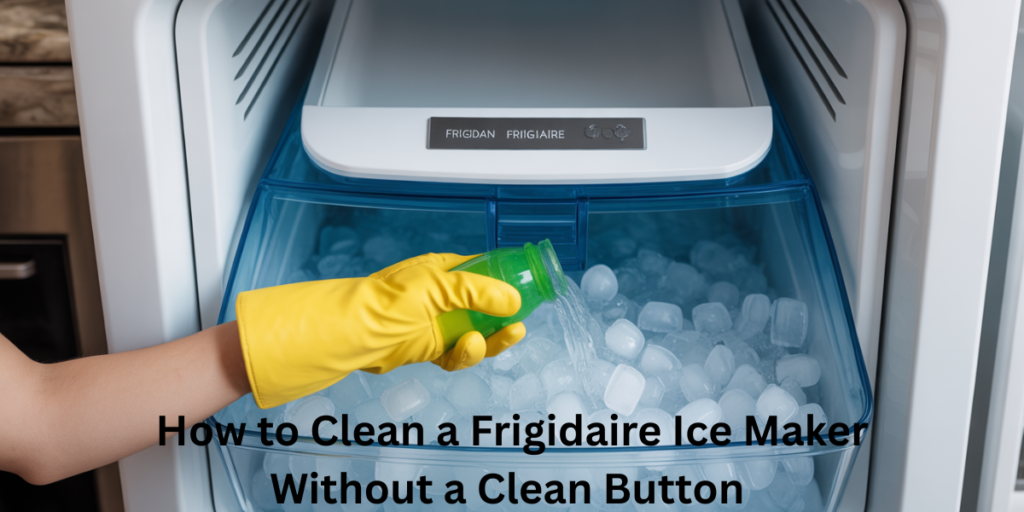
The most common Frigidaire portable ice maker problems are mineral buildup (Fix 7) and a stuck water sensor (Fix 8). Frigidaire portable models — including the EFIC117-SS and EFIC123-SS — use a reservoir float sensor that is prone to sticking when hard water deposits form around it. Clean the float sensor with vinegar every 30 to 60 days. If the machine shows the “Add Water” light with a full reservoir, that sensor is almost always the culprit. For a full cleaning walkthrough specific to Frigidaire models, see our dedicated Frigidaire cleaning guide.
Orgo Ice Maker Not Making Ice
The Orgo ice maker is a popular small countertop model. Common issues include the machine starting a cycle but producing no ice (usually a pump clog — see Fix 6), or the machine shutting off after one cycle (usually a full bin sensor — see Fix 3). The Orgo is also sensitive to room temperature — keep it out of warm areas or direct sunlight. A reset (Fix 5) resolves most Orgo ice maker issues that come on suddenly.
Countertop Ice Maker Not Making Ice
Small countertop ice makers share the same core mechanical design as larger portable units. The most frequent issues are: not enough water, the room too warm, mineral buildup, and ice jams on the evaporator. Because countertop units are compact, their water lines are shorter and clog faster — clean them more frequently than larger units. If your countertop ice maker is not working after a recent move, check the room temperature and make sure the unit is on a flat, level surface. An uneven surface causes water to distribute unevenly across the ice tray.
Why Is My Commercial Ice Maker Not Making Ice
Commercial ice machines are more complex than portable units and require more systematic troubleshooting. The most common reasons a commercial machine stops making ice include: a clogged water filter (replace every 6 months), low refrigerant (requires a licensed HVAC technician), a faulty water inlet valve, dirty condenser coils, or a failed harvest sensor. Unlike portable machines, most commercial ice maker repairs should be handled by a certified technician. Always check the error code display if your commercial machine has one — the code will point directly to the faulty component.
4. Portable Ice Maker Not Pumping Water
If your machine powers on and you can hear it running, but no water ever reaches the ice tray, the water pump is the first place to check. Here is a quick diagnostic:
- Listen: When the machine starts a cycle, the pump should make a soft, steady humming sound. No sound = pump motor failed. Sound but no water = clog.
- Check the pump inlet screen: Remove the reservoir and look for the small mesh screen at the bottom of the reservoir compartment. Rinse it under warm water and clear any debris.
- Check for kinks: Some models have a small flexible tube connecting the reservoir to the pump. Make sure it is not bent or blocked.
- Run a vinegar clean cycle: Mineral buildup inside the pump is the most common cause of reduced or zero water flow. A vinegar cycle (Fix 7) clears most clogs.
- Test after cleaning: Refill the reservoir and restart. If water flows to the ice tray, the clog is cleared. If still no flow after cleaning, the pump motor needs replacement.
5. Portable Ice Maker Fan Not Working
The cooling fan is critical to the entire freezing process. Here is how to diagnose a fan problem quickly:
- How to check: Place your hand behind or on the side of the machine within 2 to 3 minutes of turning it on. You should feel warm air being expelled. If you feel nothing and the machine is warming up on the outside, the fan is not running.
- Check for obstructions: Unplug the machine and look into the vent area. A piece of ice, food debris, or buildup can physically block the fan blade.
- Clear dust from condenser coils: Use compressed air to blow through the vents every 3 months. Dust-clogged coils force the fan to work harder and eventually overheat it.
- If the fan blade spins freely but does not run: The fan motor has failed. For most portable units under warranty, contact the manufacturer for a replacement unit. For out-of-warranty machines, a replacement fan motor is typically available for $15 to $40, depending on the model.
6. How to Reset Any Portable Ice Maker
A proper reset is the single most underused troubleshooting step. Here is the correct way to do it:
- Hold the POWER button to turn the machine off (or simply unplug it).
- Drain the water reservoir completely.
- Leave the machine unplugged for at least 60 full seconds. This allows the control board capacitors to discharge completely.
- Refill the reservoir with fresh, clean water.
- Plug the machine back in and power it on.
- If there is a dedicated RESET button (check your manual — it is sometimes located on the underside or inside the lid), hold it for 3 to 5 seconds after powering on.
- Allow the machine to run at least two full cycles before deciding it has not worked.
✅ A reset works best for: unexplained shutdowns, sensor errors, machines that stopped mid-cycle, and post-power-outage issues.
How to Prevent Your Portable Ice Maker from Stopping Again
The most reliable way to keep your ice maker producing consistently is a simple maintenance routine:
- Clean every 30 to 60 days using a vinegar-water solution or commercial ice machine cleaner. This prevents the mineral buildup that causes most pump and sensor issues.
- Use filtered water instead of hard tap water. This single change extends the life of your pump and evaporator significantly.
- Empty and dry the reservoir if you are not using the machine for more than 3 days. Stagnant water grows mold and bacteria quickly.
- Keep the lid closed when not scooping ice. An open lid lets warm room air in, raises the internal temperature, and stresses the compressor.
- Maintain proper clearance — never push the machine against a wall or enclose it. The back vents need at least 8 inches of airflow to keep the condenser cool.
- Level the machine on its surface. An unlevel machine causes uneven water distribution across the ice tray, producing misshapen ice and stressing the pump.
- Never add juice, soda, or flavored water to the reservoir. Only clean water should ever go in. Sugary or acidic liquids damage the pump and internal components permanently.
7. When to Repair vs. Replace Your Portable Ice Maker
Not every ice maker is worth repairing. Here is a simple decision guide:
| Contact the manufacturer — most have a 1-year warranty covering defects | Recommendation |
|---|---|
| Machine is under 1 year old | Contact manufacturer — most have a 1-year warranty covering defects |
| Pump clog or sensor issue | Repair — these are simple, inexpensive fixes |
| Fan motor failed | Repair if part costs under $40; replace if labor + part exceeds 50% of machine value |
| Compressor failed | Replace — compressor repair cost usually exceeds the price of a new portable unit |
| Control board failed | Replace — board replacement is often close to the cost of a new machine |
| Machine is 5+ years old with recurring issues | Replace — portable ice makers typically last 5 to 7 years with proper care |
| Refrigerant leak (oily residue visible) | Replace — refrigerant handling requires certification and is not cost-effective on portable units |
FAQs
Can I use my portable ice maker outside in summer?
Yes, but with caution. Most portable ice makers are rated for up to 90°F ambient temperature. On a hot summer day in direct sunlight, surface temperatures can exceed 100°F, which will cause the compressor to overheat and shut down. Place the machine in a shaded spot, ensure good airflow around all sides, and avoid setting it on hot surfaces like blacktop or metal tables in direct sun.
Is it safe to leave a portable ice maker on all day?
Yes, portable ice makers are designed to run continuously. They automatically pause when the ice bin is full and restart when ice is removed. However, you should not leave the machine running with an empty reservoir for extended periods — the dry-running pump can overheat and fail. Most modern machines have a low-water shutoff, but it is still good practice to check the water level daily.
Why is my ice maker making small or hollow ice cubes?
Small or hollow ice cubes are almost always caused by insufficient water flow to the ice tray. Check that the reservoir is filled to the MAX line, clean the pump inlet screen, and make sure the water pump is running properly. If water flow is fine, the room temperature may be too high — a machine struggling in the heat produces ice faster (and therefore smaller) to try to keep up with the thermal load.
How do I know if my portable ice maker compressor is broken?
The clearest sign of a failed compressor is that the machine runs — the pump moves water, you can hear it operating — but the water never freezes after 20 to 30 minutes of a full cycle. A working compressor also produces warmth at the back vents within the first few minutes of operation. If the back of the machine stays completely cool while running, the compressor is not functioning. You may also notice a subtle oily smell or visible oily residue near the base, which indicates a refrigerant leak.
How long do portable ice makers last?
With proper cleaning and maintenance, most portable ice makers last 5 to 7 years. Machines that are cleaned regularly, use filtered water, and are kept in an appropriate temperature environment can last up to 10 years. The most common reason portable ice makers fail prematurely is neglected cleaning, leading to pump failure or compressor overwork from blocked ventilation.
Quick Diagnosis Table — Find Your Problem Fast
| The machine runs fine, but the bin fills, then stops | Most Likely Cause | Fix Number |
|---|---|---|
| Machine will not turn on | Power / GFCI outlet tripped | Fix 1 |
| “Add Water” light on, reservoir is full | Stuck water sensor / float | Fix 8 |
| Runs but produces no ice at all | Compressor or thermostat failure | Fix 11, 12 |
| Machine starts then immediately stops | Needs reset / control board | Fix 5, 12 |
| No water reaching ice tray | Pump clog or pump failure | Fix 6 |
| Ice stuck to rods, does not drop | Ice jam on evaporator | Fix 9 |
| Ice production getting slower over time | Mineral scale buildup | Fix 7 |
| Machine overheating, shuts off | Fan not working / poor ventilation | Fix 10 |
| Small or hollow ice cubes | Low water flow or high room temp | Fix 2, 4 |
| Ice tastes bad or smells off | Mold or mineral buildup | Fix 7 |
| Machine runs fine but bin fills, then stops | Bin full — normal behavior | Fix 3 |
| Random, erratic behavior | Control board issue | Fix 5, 12 |
Final Thoughts
The question “why is my portable ice maker not making ice” has more possible answers than most people expect — but the good news is that the majority of problems are completely fixable at home in under an hour. Power issues, water sensor problems, pump clogs, ice jams, and mineral buildup together account for well over 80% of all portable ice maker failures.
Work through the 2-minute quick-fix checklist first. If that does not solve it, use the diagnosis table to find your specific symptom and jump to the right fix. For Frigidaire, Orgo, countertop, and commercial models, the same principles apply, just with the model-specific notes above in mind.
If you keep your machine clean, use filtered water, and maintain proper ventilation, you should get many years of reliable, great-tasting ice from it. Regular maintenance is always cheaper than a replacement.