Introduction
Picture this: You’ve just moved into a new apartment, or maybe you’re renovating your kitchen. You want fresh ice at your fingertips, but one big question comes up—can a refrigerator have an ice maker without water line when it’s nowhere near plumbing? Hiring a plumber to run pipes through your walls could cost hundreds of dollars. Sound familiar?
Here’s the good news that might surprise you: Yes, you absolutely can have ice-making capabilities without connecting your refrigerator to a water line. In fact, millions of homeowners are discovering smarter, more flexible solutions that don’t require any plumbing work at all.
Whether you’re a renter who can’t modify your apartment, a homeowner tired of dealing with leaky water lines, or someone who simply wants ice without the installation headache, this guide reveals every practical option available to you in 2026.
What you’ll discover in this article:
- The truth about whether refrigerators actually need water lines to function
- Game-changing alternatives that produce ice without any plumbing
- Money-saving refrigerator options that skip water dispensers entirely
- Commercial-grade solutions for serious ice production needs
- Real cost comparisons between traditional and water-line-free setups
Let’s dive into how you can enjoy perfectly chilled drinks and ice-filled coolers without running a single pipe.
Table of Contents
Understanding Ice Makers and Water Lines
Do All Refrigerators Need a Water Line?
Not every refrigerator requires a water line connection. In fact, there are several scenarios where you can enjoy ice-making capabilities without running plumbing to your fridge:
Traditional refrigerators with built-in ice makers typically require a direct water line connection. These models connect to your home’s cold water supply through copper or plastic tubing, automatically filling the ice maker tray and producing ice continuously.
However, many modern refrigerators operate perfectly fine without any water connection. If you choose a model without an ice maker or water dispenser, you won’t need plumbing at all. These are among the best refrigerators without water dispenser options for renters or anyone avoiding installation hassles.
Does a Fridge Need a Water Line to Function?
This is a common misconception that stops many people from buying their ideal refrigerator. A refrigerator absolutely does not need a water line to work as a refrigerator. The cooling function operates independently of any water connection.
You only need a water line if you want to use:
- The automatic ice maker
- The water dispenser on the door
- Any water-based filtering systems
Without a water line, your fridge will refrigerate and freeze food just as effectively. You’ll simply need alternative solutions for ice and cold water.
Solutions for Ice Making Without a Water Line
Portable Ice Makers: The Game-Changing Alternative
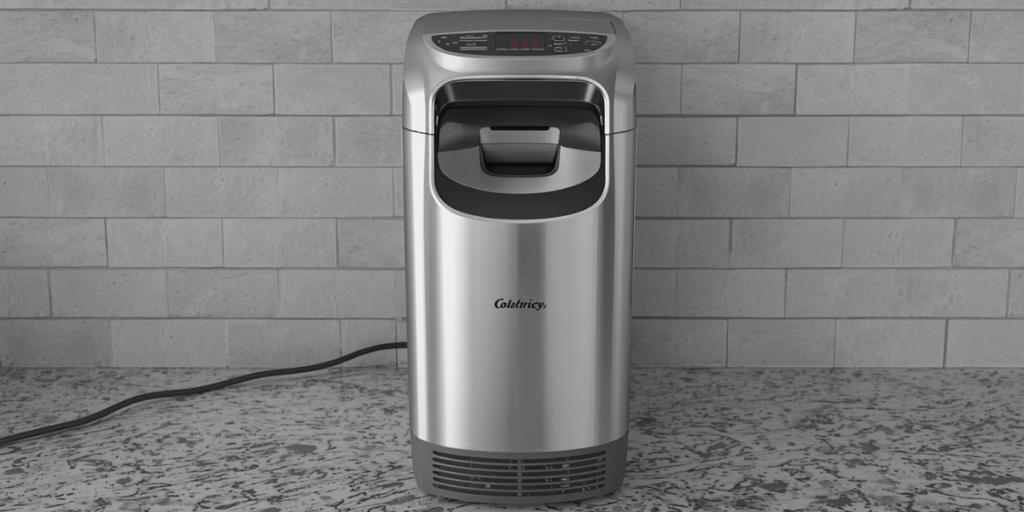
The most practical solution for ice without plumbing is investing in a countertop ice maker with no water line requirement. These standalone units have revolutionised home ice production.
How portable ice makers work:
- You manually fill a reservoir with water (no plumbing required)
- The machine freezes water using a self-contained cooling system
- Ice forms quickly—most models produce the first batch in 6-10 minutes
- Capacity ranges from 26 to 40 pounds of ice per day
Best scenarios for countertop ice makers:
- Apartments and rental properties where plumbing modifications aren’t allowed
- Kitchen islands or areas far from water supply lines
- RVs, boats, and outdoor kitchens
- Home offices, basements, or garage refrigerators
- Anyone who wants ice production flexibility without permanent installation
Popular budget ice maker options start around $100-150, while premium models with advanced features can reach $300-400. The investment pays off quickly when you consider the convenience and elimination of plumbing costs.
Manual Ice Trays: The Traditional Approach
Never underestimate the power of old-fashioned ice cube trays. While they require more effort, they’re the ultimate no-installation solution. Modern silicone trays make ice removal easier than ever, and they work with any freezer—no special equipment needed.
Refillable Ice Maker Conversion
Some handy homeowners have found creative workarounds for built-in ice makers. While manufacturers don’t officially recommend this, it’s theoretically possible to manually fill the ice maker reservoir on some refrigerator models. However, this approach has significant drawbacks:
- Requires frequent monitoring and refilling
- Risk of overflow or water damage
- May void your warranty
- Not all ice maker designs accommodate manual filling
- Time-consuming compared to alternatives
Most appliance experts agree that if you’re committed to avoiding a water line, purchasing a dedicated countertop ice maker delivers better results with less hassle.
Best Refrigerator Options Without Water Dispensers
If you’re in the market for a new fridge and want to skip the water line entirely, several excellent models prioritise core refrigeration over built-in ice and water features.
Top Picks: Best Refrigerators Without a Water Dispenser
French door refrigerators often offer models without through-the-door ice and water. These provide spacious interiors, flexible storage, and modern aesthetics without the complexity of plumbing requirements.
Side-by-side models are available in configurations without dispensers. You get full freezer space without sacrificing cubic feet to ice maker mechanisms.
Top freezer refrigerators represent the best refrigerator without ice maker and water dispenser category for budget-conscious shoppers. These simple, reliable designs focus on efficient food storage and typically cost $800-1,500 less than comparable models with ice makers.
Key advantages of refrigerators without built-in ice/water systems:
- Lower purchase price (typically $500-2,000 less)
- Reduced maintenance and repair costs
- More usable freezer space
- No water line installation required
- Fewer potential leak points
- A simpler design means fewer things that can break
When shopping, look for brands like Whirlpool, GE, Frigidaire, and LG, all of which offer quality models without water connections. Read reviews focusing on cooling performance, energy efficiency, and storage layout rather than ice-making features.
Commercial Ice Maker Solutions for Higher Volume Needs
For those who need substantial ice production—whether for home entertaining, small businesses, or commercial applications—commercial ice maker machines provide industrial-level output.
Understanding Commercial Ice Makers
Commercial ice maker without water line do exist, though they’re less common than plumbed versions. These units typically use a reservoir system that requires regular refilling but doesn’t need permanent plumbing.
Key considerations for commercial ice machines:
Production capacity: Commercial units produce anywhere from 50 to 500+ pounds of ice daily. This dramatically exceeds residential countertop models, which max out around 40 pounds per day.
Ice types: Different commercial machines produce various ice shapes—cube, flake, nugget, or gourmet ice. Choose based on your specific application.
Space requirements: Commercial ice makers are significantly larger than countertop units. Most require dedicated floor space and proper ventilation.
Cost: Expect to invest $1,000-5,000+ for commercial ice makers for sale. Budget options start around $800, while high-capacity restaurant-grade units can exceed $10,000.
Water source flexibility: Some newer commercial models offer both plumbed and reservoir options, giving you installation flexibility. However, most high-volume commercial ice maker machines work best with direct water line connections for continuous operation.
For home users needing commercial-level production, carefully evaluate whether the size, cost, and maintenance justify the capacity increase over multiple countertop units or a plumbed residential ice maker.
Installation and Practical Considerations
Can You Use a Refrigerator Without a Water Line?
Absolutely. Here’s what you need to know about installation and operation:
If your refrigerator has an ice maker but no water line:
- The ice maker simply won’t function (it may need to be turned off to prevent damage)
- All other refrigerator functions work normally
- No special modifications needed
- Some models may occasionally beep or show warnings about the water connection
Do you need a water line for a fridge? Only if you specifically want to use the built-in ice maker or water dispenser. The refrigeration system operates completely independently.
Installation Cost Comparison
Water line installation costs (for traditional built-in ice makers):
- DIY installation: $50-150 for materials (tubing, connectors, shut-off valve)
- Professional installation: $200-500, depending on distance from water source
- Potential wall or floor modifications: Add $100-300
- Annual filter replacement: $50-100
Countertop ice maker costs:
- Initial purchase: $100-400
- No installation required
- Minimal ongoing costs (electricity and occasional cleaning)
- No filters to replace
For renters or anyone avoiding permanent modifications, portable ice makers offer tremendous value.
Best Small Ice Makers for Home Use
When space is limited, the best small ice makers for home applications combine compact footprints with surprising production capacity:
Compact countertop models measure as small as 9″ x 12″ x 13″, fitting easily on kitchen counters, bar areas, or small apartment kitchens. Despite their size, they typically produce 26-28 pounds of ice daily.
Best tabletop ice machines feature:
- Quick production cycles (first ice in 6-8 minutes)
- Quiet operation suitable for living spaces
- Easy-to-clean removable components
- LED indicators showing ice fullness and water needs
- Multiple ice size options
Popular brands in this category include Igloo, hOmeLabs, Euhomy, and Magic Chef. Models typically range from $120-250, making them accessible budget ice maker choices.
FAQs
Do all fridges have water lines?
No. Only refrigerators with ice makers or water dispensers require water lines. Many models are designed without these features and need no plumbing connection whatsoever.
Does a refrigerator need a water line to stay cold?
Absolutely not. The refrigeration system is completely separate from any ice-making or water dispensing features. Your fridge will maintain proper temperature regardless of the water line connection.
Do you need a water line for an ice maker?
For most households, a countertop ice maker offers the best combination of convenience, capacity, and flexibility without requiring any installation or plumbing modifications.
What’s the best alternative to a built-in ice maker?
For most households, a countertop ice maker offers the best combination of convenience, capacity, and flexibility without requiring any installation or plumbing modifications.
Can you convert a refrigerator ice maker to work without a water line?
While technically possible on some models, manufacturers don’t recommend this approach. Manual filling risks overflow, may void warranties, and proves less convenient than dedicated countertop ice makers.
Making Your Decision
Choosing between a water line-connected ice maker and alternative solutions depends on your specific situation:
Choose a traditional water line connection if:
- You own your home and can modify plumbing
- The water source is easily accessible (less than 10 feet from the fridge)
- You want seamless integration and automatic operation
- You’re purchasing a new refrigerator with ice/water features
- You prefer not having a separate appliance
Choose a countertop ice maker if:
- You rent or cannot modify plumbing
- Your refrigerator location is far from water sources
- You want the flexibility to move your ice maker
- You need ice, but don’t want to buy a new refrigerator
- You value convenience over built-in aesthetics
- You’re looking for the best budget ice maker solution
Choose a refrigerator without ice/water features if:
- You rarely use ice or don’t mind making it manually
- You want maximum freezer space
- You prefer lower maintenance and fewer potential failure points
- You’re prioritising purchase price and ongoing costs
- You’ll supplement with a countertop ice maker if needed
Conclusion
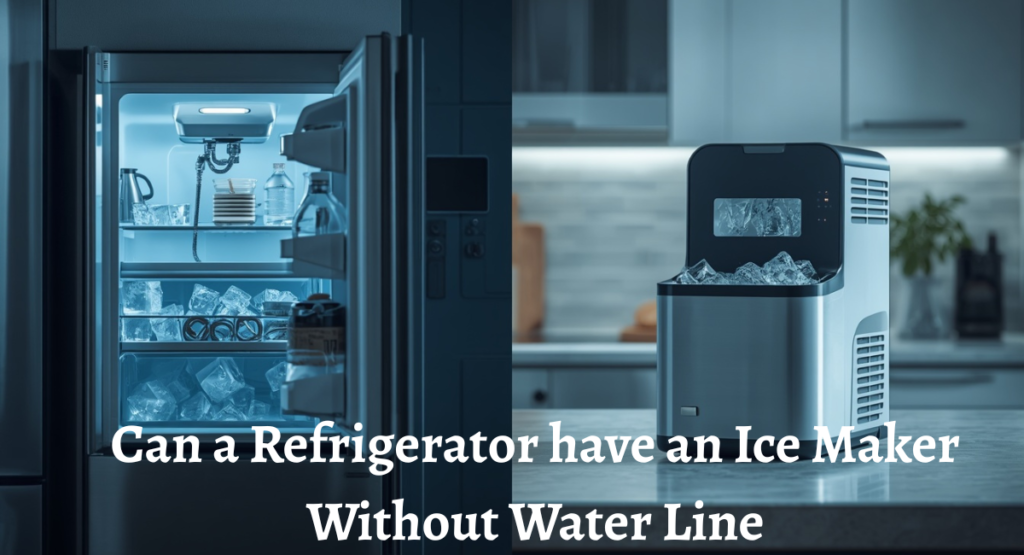
Can a refrigerator have an ice maker without a water line? While built-in ice makers typically require plumbing, you have excellent alternatives that provide ice without any permanent installation. Countertop ice makers have become increasingly popular, offering convenient, affordable ice production without the complexity of water lines.
Whether you choose a refrigerator without an ice maker and water dispenser, invest in a countertop ice maker with no water line required, or explore commercial ice maker options for higher-capacity needs, you can enjoy cold beverages and ice-filled coolers without running a single pipe.
The key is matching your solution to your lifestyle, space constraints, and budget. For most modern households, the flexibility and simplicity of portable ice makers combined with no-frills refrigerators deliver the best overall value and convenience.
Looking for specific product recommendations? Research current models from trusted appliance retailers and read verified customer reviews to find the best refrigerators without water dispenser and ice maker solutions for your needs. Compare features, capacity, and warranty coverage to make an informed decision that serves you well for years to come.