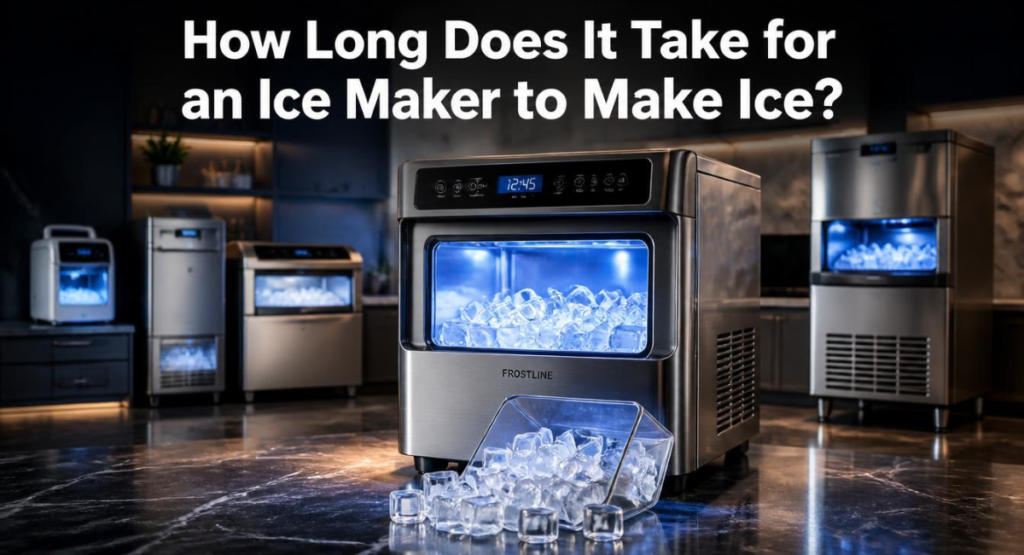
You open the freezer for a quick refill, and the bin is nearly empty again. Before you assume something is broken, it helps to know what “normal” actually looks like. The honest answer is that how long does it take for an ice maker to make ice depends heavily on the type of machine you own — a built-in refrigerator ice maker, a countertop portable unit, or a commercial machine all work on completely different timelines.
In this guide, we’ll break down the real numbers for each type, explain what happens during a single ice-making cycle, cover what to expect from a brand-new installation, and walk through the most common reasons your machine might be running slower than it should.
Quick Answer
| Ice Maker Type | Time for First Batch | Cubes Per Cycle | Full Bin Time |
|---|---|---|---|
| Refrigerator (built-in) | 90 to 120 minutes | 8 to 10 cubes | 12 to 24 hours |
| Portable / Countertop | 6 to 15 minutes | 8 to 10 pieces | 1.5 to 2 hours |
| Commercial / Under-Counter | 15 to 30 minutes | Varies by model | Depends on daily output rating |
| Brand-New Installation | 24 hours (cooling) + up to 72 hours | Gradually ramps up | Up to 3 days |
Now let’s look at each category in detail, because the “right” answer really depends on which machine is sitting in your kitchen.
Refrigerator Ice Makers: What’s the Real Cycle Time?
A standard built-in refrigerator ice maker works in a repeating loop rather than producing ice continuously. Each cycle usually takes somewhere between 90 minutes and two hours, and every completed cycle typically drops 8 to 10 cubes into the bin. Over a full day, that adds up to roughly 120 to 150 cubes, or around 4 to 5 pounds of ice, assuming the machine is running under normal household conditions.
During each cycle, the ice maker goes through four basic stages:
- Water fill: A small valve opens and measures out water into the ice tray or mold.
- Freezing: The freezer’s cold air hardens the water into solid cubes, which is the longest part of the cycle.
- Harvest: A heating element or motor loosens the cubes from the mold.
- Release: A rotating arm or ejector pushes the finished cubes into the storage bin.
Once the bin fills up, a sensor or a mechanical arm shuts production off automatically, so the machine isn’t wasting energy making ice you don’t need yet.
How Long Does It Take for a New Ice Maker to Start Working?
This is where a lot of confusion comes from, because a brand-new refrigerator or a freshly installed ice maker doesn’t behave the same way as one that’s already been running for months.
After installation, the refrigerator needs roughly 24 hours just to reach the correct internal temperature. Only once it’s fully cooled down does the ice maker start its first cycle. From there, it can take another 24 to 72 hours before the bin is completely full and production settles into its normal rhythm. If you just installed a new fridge or replaced an ice maker module and nothing seems to be happening on day one, that’s completely expected — give it the full three-day window before assuming there’s a fault.
How Long Does a Portable or Countertop Ice Maker Take?
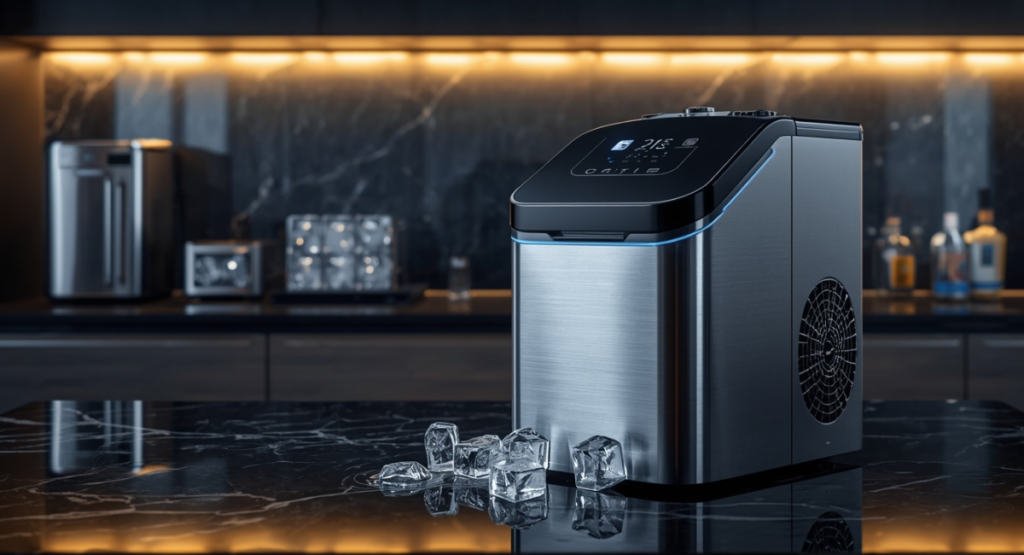
Portable ice makers work on a completely different principle than fridge units, which is exactly why they feel so much faster. Instead of freezing cubes in a mold, most countertop models use metal freezing rods or fingers that are dipped into a water reservoir. The result is a small batch of bullet-shaped or nugget ice ready in as little as 6 minutes, with most machines finishing a full batch somewhere between 6 and 15 minutes.
A few things influence exactly where in that range your machine lands:
- Ice shapes: Small bullet or nugget shapes freeze faster because they have more surface area relative to their size. Larger, clearer cube shapes take longer for the center to fully harden.
- Water temperature: Starting with cold water instead of room-temperature or warm water noticeably shortens each cycle.
- Ambient room temperature: A portable unit sitting in a hot kitchen or garage will run slower than one in an air-conditioned room.
- Ventilation: These units release heat from the back and sides, so a machine pushed flush against a wall may struggle to cool efficiently.
Most portable machines need to complete several cycles before the compressor and internal reservoir are fully “primed,” so the first batch or two of the day is often a little slower than the ones that follow.
How Long Does a Commercial Ice Maker Take to Make Ice?
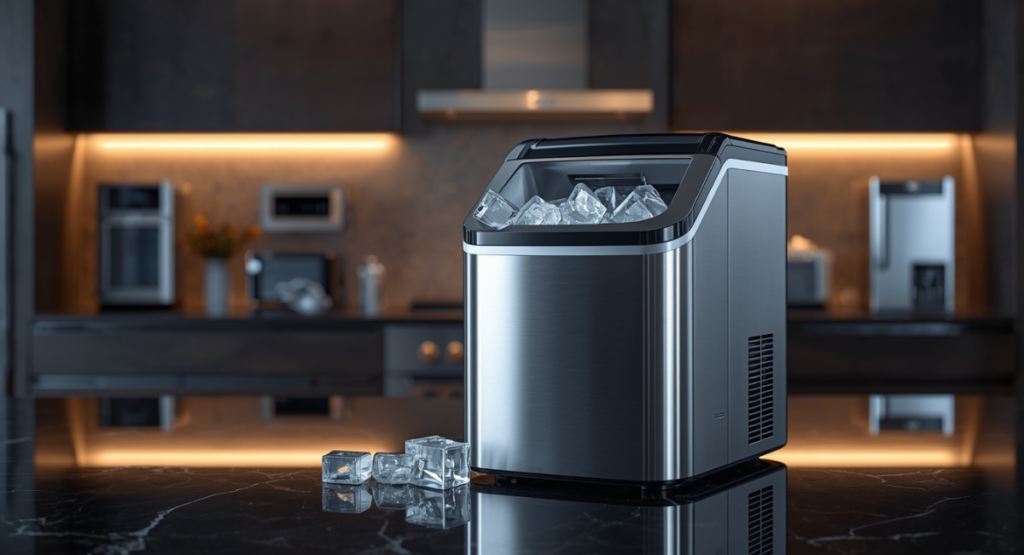
Commercial and under-counter machines are rated differently — by pounds of ice produced per 24-hour period rather than by minutes per batch. A smaller commercial unit might be rated for around 50 pounds a day, while a larger one can push past 150 pounds in the same window. Because of that, a single cycle on a commercial machine can take anywhere from 15 to 30 minutes, but the real number that matters for a business is the daily output rating, not the individual cycle time.
Ambient temperature plays a bigger role here too. A commercial ice machine tucked into a hot kitchen line or a non-climate-controlled storage room will take noticeably longer per cycle than the same model sitting somewhere cooler.
What Affects How Fast an Ice Maker Works?
Regardless of which type you own, the same handful of variables tend to determine whether your machine is running at full speed or lagging behind.
| Factor | Effect on Ice Production |
|---|---|
| Freezer/Storage Temperature | Should stay between 0°F and 5°F for fridge units; warmer temps slow every cycle down |
| Water Pressure | Needs to stay above roughly 20-40 psi; low pressure means slower fills and smaller cubes |
| Water Filter Condition | A clogged filter restricts flow and can quietly reduce output over several months |
| Ambient Room Temperature | Hot kitchens, garages, or poorly ventilated spots make every cycle slower |
| Ice Shape/Size | Small nugget or bullet ice freezes faster than large clear cubes |
| Machine Age | Older compressors and worn seals gradually lose efficiency |
When Slow Ice Production Actually Means Something Is Wrong
A little seasonal slowdown is normal, especially in summer when both the room and the incoming water are warmer. But if your ice maker suddenly drops from its usual pace to almost nothing, or you notice small, hollow, or oddly shaped cubes, it’s worth checking a few things before calling for a repair: water pressure at the shutoff valve, the condition of the water filter, whether the freezer temperature has drifted upward, and whether the feeler arm or sensor is stuck in the “off” position.
If your machine has slowed down specifically since the weather warmed up, we’ve put together a full breakdown of the seasonal causes and fixes in our guide on why an ice maker slows down in summer.
And if your unit is throwing an actual fault code instead of just running slow, our ice maker error code guide covers the most common codes across GE, Frigidaire, Whirlpool, and Samsung models.
Fridge vs. Portable vs. Commercial: Side-by-Side Comparison
| Category | Best For | Typical Speed | Daily Output |
|---|---|---|---|
| Refrigerator Ice Maker | Everyday household use | 90–120 min per batch | 4–5 lbs |
| Portable Ice Maker | Parties, RVs, small kitchens | 6–15 min per batch | 20–35 lbs |
| Commercial Ice Machine | Restaurants, bars, offices | 15–30 min per batch | 50–150+ lbs |
Interestingly, portable units often out-produce a standard fridge ice maker over a full day, even though they’re smaller — the shorter cycle time more than makes up for the smaller batch size. If you’re comparing brands before buying one, our roundups of the best EUHOMY ice makers and best Silonn ice makers break down real-world cycle times model by model.
Frequently Asked Questions
How long does it take for an ice maker to make ice the very first time?
For a new installation, budget 24 hours just for the fridge to cool down, then up to another 72 hours before the bin reaches full capacity and cycles settle into a normal rhythm.
Is 90 minutes normal for an ice maker cycle?
Yes. Ninety minutes to two hours per cycle is completely normal for a standard refrigerator ice maker producing 8 to 10 cubes at a time.
Why is my portable ice maker slower than the box says?
Room temperature and water temperature are the two biggest culprits. Using ice-cold water and running the unit in a cooler room usually brings cycle times back down to the advertised range.
Can I speed up how fast my ice maker works?
You can help it along by keeping the freezer at the correct temperature, replacing the water filter on schedule, maintaining good water pressure, and giving the unit proper ventilation, but you can’t push it meaningfully faster than its designed cycle time.
My ice maker is only filling one side of the tray — is that a speed issue?
Not usually — that’s typically a separate mechanical issue rather than a slow cycle. We cover the exact cause and fix in our one-sided ice maker guide.
Final Thoughts
So, how long does it take for an ice maker to make ice? For most households, the honest range is 90 minutes to two hours per batch for a fridge unit, and 6 to 15 minutes per batch for a portable countertop machine. Commercial machines sit somewhere in between on a per-cycle basis but are really measured by daily output instead. As long as your machine falls within these windows and the bin keeps refilling steadily, everything is working exactly as it should.
If your ice maker is falling well outside these ranges, it’s usually a maintenance issue rather than a design flaw — and in most cases, a clean filter, correct freezer temperature, and steady water pressure are all it takes to get things back on track. For step-by-step cleaning instructions on a specific model, take a look at our Frigidaire EFIC117-SS cleaning guide, or browse our full ice maker blog for more troubleshooting and buying advice.