Introduction
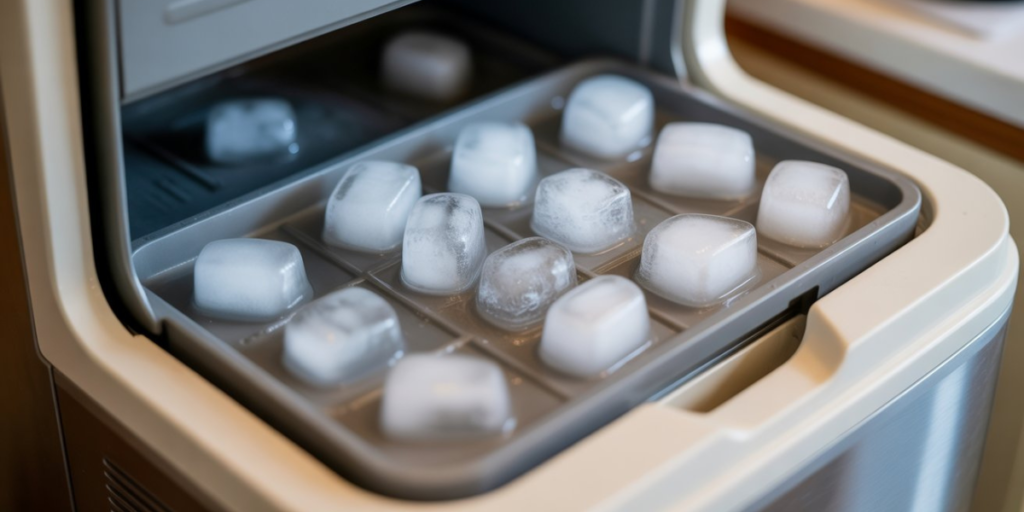
You reach for a glass of ice-cold water, and something looks off. The cubes are tiny. Hollow. Half-formed. Some crumble the moment you touch them. Sound familiar?
You are not alone. Small and hollow ice cubes are one of the most common ice maker complaints — and the good news is that most causes have a simple fix you can do yourself in under 30 minutes.
In this guide, we cover every possible reason your ice maker is producing small or hollow cubes, ranked from most common to least common. We also include a quick diagnosis checklist and tell you exactly when to call a professional.
Table of Contents
Let’s fix your ice maker.
Quick Answer: What Causes Small or Hollow Ice Cubes?
Small or hollow ice cubes are almost always caused by one of these two root problems:
- Not enough water is reaching the ice mold (water flow issue)
- The water is freezing too fast or too slow (temperature issue)
Everything else on this list falls into one of those two categories. Keep reading to find your exact culprit.
Why Is My Ice Maker Making Small or Hollow Ice Cubes? 9 Reasons Explained
1. Clogged or Old Water Filter (Most Common Cause)
Why it happens: Your refrigerator’s water filter removes impurities from your water supply before it reaches the ice maker. Over time, the filter collects so much sediment and debris that water flow is significantly reduced. Less water reaching the ice mold = smaller, hollow, or misshapen cubes.
How to diagnose it:
- Check when you last replaced your filter. If it has been more than 6 months, this is almost certainly your problem.
- Check the water dispenser. If water flows slowly from the dispenser, the filter is clogged.
How to fix it:
- Locate your water filter (usually inside the fridge compartment or in the base grille).
- Replace it with the correct filter for your refrigerator model.
- After installing a new filter, flush the water system by dispensing water for 3–5 minutes. This purges air and carbon residue from the new filter.
- Run 2–3 cycles of ice and discard them before using the ice.
Pro Tip: Replace your water filter every 6 months — or sooner if your household uses a lot of water. Set a reminder on your phone so you never forget.
2. Low Water Pressure
Why it happens: Your ice maker needs a minimum of 20 PSI (pounds per square inch) of water pressure to fill the ice mold. Most appliances work best between 35 and 120 PSI. When pressure falls below the minimum, the mold does not fill fully, resulting in small or hollow cubes.
How to diagnose it:
- Dispense water from your refrigerator. Does it come out as a weak trickle rather than a steady stream?
- Do other faucets in your home also have low pressure?
- Are you using a reverse osmosis (RO) filtration system? RO systems reduce water pressure significantly.
How to fix it:
- Check your home’s main water pressure using a pressure gauge (available at any hardware store for under $15).
- If pressure is below 20 PSI, contact a plumber to check your main supply valve.
- If you use an RO system, the incoming pressure must be 40–60 PSI. Let the RO storage tank refill fully before using the ice maker, especially after dispensing a large amount of water.
- Make sure your water shut-off valve (usually behind the refrigerator) is fully open.
3. Kinked or Bent Water Supply Line
Why it happens: The water supply line is the small tube that runs from your home’s water supply to the back of your refrigerator. If the fridge was pushed too close to the wall after installation, this line can kink or bend — partially or fully blocking water flow.
How to diagnose it:
- Pull your refrigerator away from the wall.
- Inspect the water line along its entire length. Look for any sharp bends, kinks, or pinch points.
How to fix it:
- Carefully straighten any kinks in the line.
- When pushing the refrigerator back, leave a few inches of space between the fridge and the wall so the line is never compressed.
- If the line is permanently kinked or damaged, replace it. A new supply line costs $10–$20 at most hardware stores.
Pro Tip: Always leave a coil of extra tubing (called a service loop) behind your refrigerator. This gives the line room to flex when you move the fridge.
4. Faulty Water Inlet Valve
Why it happens: The water inlet valve is an electrically-controlled valve that opens to let water into your ice maker and water dispenser. If it is defective, clogged with mineral deposits, or has insufficient power, it will not open fully, restricting water flow and producing small or hollow ice.
How to diagnose it:
- If your water pressure and filter are both fine, but you are still getting small cubes, the inlet valve is the likely culprit.
- Inspect the valve (located at the back of the refrigerator) for visible mineral buildup or debris in the screen.
- Use a multimeter to test the valve’s solenoid for continuity. A healthy valve should read between 500Ω and 1,500Ω. Outside this range means it has failed.
How to fix it:
- First, clean the valve’s filter screen with warm water.
- If the valve still does not work correctly, replace it. Water inlet valves cost $20–$60 depending on the brand, and the replacement is a manageable DIY job.
5. Wrong Freezer Temperature
Why it happens: Temperature plays a huge role in ice quality. If your freezer is too warm, water won’t freeze completely and cubes stay small or hollow. If it is too cold (below -5°F / -20°C), water may freeze too quickly — trapping air bubbles inside the cubes and creating hollow centers.
The sweet spot for perfect ice:
- Freezer: 0°F (-18°C)
- Refrigerator: 33–40°F (0–4°C)
How to diagnose it:
- Use an appliance thermometer (cheap and very useful) to verify your actual freezer temperature — don’t rely on the dial setting alone.
How to fix it:
- Adjust your freezer temperature to exactly 0°F.
- If the freezer is too warm, check the door seals for gaps and make sure the door closes tightly.
- Do not overpack the freezer — proper airflow is essential for maintaining even temperature.
6. Refrigerator Is Not Level
Why it happens: When your refrigerator is not sitting level on the floor, the ice mold inside tilts. Water added to the mold collects unevenly — filling some cube sections more than others. The result is ice cubes that vary wildly in size, with many coming out small or only partially formed.
How to diagnose it:
- Place a bubble level on top of your refrigerator.
- Check both side-to-side and front-to-back.
How to fix it:
- Adjust the leveling feet at the bottom of the refrigerator.
- The fridge should be level side-to-side but tilted very slightly backward (front slightly higher than back). This allows doors to swing shut on their own and helps the ice maker fill evenly.
- Recheck with the bubble level after each adjustment.
7. Air in the Water System (After Filter Change or New Installation)
Why it happens: Any time you install a new water filter or hook up a new refrigerator, air gets trapped in the water lines. That trapped air reduces the amount of water that reaches the ice maker and can cause small, hollow, or oddly-shaped cubes for the first few batches.
How to diagnose it:
- Did you recently replace your water filter or install a new fridge?
- Is the water coming from the dispenser sputtering or coming out unevenly?
How to fix it:
- Use a cup to hold down the water dispenser paddle for 5 seconds, then release for 5 seconds. Repeat this process for 3–5 minutes until water flows smoothly without sputtering.
- Discard the first 2–3 batches of ice after a filter change.
8. Hard Water and Mineral Buildup
Why it happens: If your home has hard water (water with high mineral content), calcium and magnesium deposits can build up inside your ice maker’s water lines, mold, and inlet valve over time. This reduces water flow and interferes with the freezing process — producing cloudy, small, or hollow cubes.
How to diagnose it:
- Look for white, chalky buildup around your water dispenser nozzle or inside the ice bin.
- Do you have hard water in your area? (You can check with a simple hard water test strip.)
How to fix it:
- Clean your ice maker every 3–6 months using a food-safe ice maker cleaning solution.
- Run a cleaning cycle per your refrigerator manual’s instructions.
- Consider installing a whole-house water softener if hard water is a major problem in your home.
- Replace the water filter more frequently — hard water clogs filters faster than normal.
9. Defective Ice Maker Assembly
Why it happens: If you have checked or fixed every issue above and your ice maker is still producing small or hollow cubes, the ice maker assembly itself may be defective. The water inlet into the ice mold may be leaking, the mold thermostat may be faulty, or the ice maker module may have failed.
How to diagnose it:
- Watch a full ice-making cycle. Do you see water dripping from the ice maker into the ice bin rather than filling the mold cleanly? This indicates a leak inside the ice maker itself.
- Are some cubes always hollow, while others are consistently perfect? A faulty module can cause inconsistent results.
How to fix it:
- If the ice maker is leaking internally, the entire ice maker assembly will need to be replaced. This is not typically a DIY repair — contact the manufacturer or a qualified appliance technician.
- Replacement ice maker assemblies cost between $50–$150 depending on the brand and model.
Quick Diagnosis Checklist
Use this checklist to find your problem fast:
| Symptom | Most Likely Cause |
|---|---|
| Cubes are small AND water dispenser is slow | Clogged water filter or low pressure |
| Cubes are hollow AND dispenser flow is normal | Faulty water inlet valve |
| Started after moving the fridge | Kinked water supply line |
| Started after filter change | Air in the water system |
| Cubes vary wildly in size | Hard water/mineral buildup |
| Cloudy, small, or crumbly cubes | Freezer temperature is too high |
| Cubes are too small AND freezer feels warm | Freezer temperature too high |
| Problem persists after all fixes | Defective ice maker assembly |
How Long Until Ice Returns to Normal?
After fixing the problem, your ice maker will not produce perfect cubes immediately. Here is what to expect:
- New filter or cleared blockage: Discard the first 2–3 batches of ice (about 6–9 hours of production). The system needs to flush out.
- Temperature adjustment: Allow 24 hours for the freezer to stabilize at the new temperature before evaluating ice quality.
- New inlet valve or ice maker: Your first full bin of ice (up to 24–48 hours) may still have minor imperfections. Give it a full day.
When to Call a Professional
You should call a qualified appliance technician if:
- You have tested and replaced the water filter and inlet valve, but the problem persists.
- You see water actively leaking from inside the ice maker unit.
- Your ice maker was recently replaced and is failing again within a short period.
- You are not comfortable testing electrical components like the inlet valve solenoid.
A professional repair typically costs $100–$300, depending on the issue and your location.
FAQs
Q: Why are my ice cubes hollow in the middle?
A: Hollow centers usually mean water froze too quickly (trapping air bubbles) or the mold did not receive enough water to fill completely. Check your water pressure, inlet valve, and freezer temperature.
Can a bad water filter cause small ice cubes?
A: Yes — this is the single most common cause. A clogged filter restricts water flow to the ice maker, causing it to partially fill the mold. Replace your filter if it has been more than 6 months.
Q: My ice maker was working fine and suddenly started making small cubes. What happened?
A: Sudden changes usually point to a water filter that finally became clogged, a kink in the supply line from moving the fridge, or a water inlet valve beginning to fail. A: Sudden changes usually point to a water filter that finally became clogged, a kink in the supply line from moving the fridge, or a water inlet valve beginning to fail.
Q: Do small ice cubes mean my refrigerator is broken?
A: Not necessarily. In most cases, small ice cubes indicate a simple, fixable issue like a clogged filter or low pressure — not a broken appliance. Work through the checklist above before calling a technician.
Q: How often should I clean my ice maker to prevent this problem?
A: Clean your ice maker every 3–6 months to prevent mineral buildup and bacteria growth. Most refrigerator manuals include cleaning instructions specific to your model.
Final Thoughts
Now you know the full answer to the question — why is my ice maker making small or hollow ice cubes — and more importantly, you know exactly how to fix it. In the vast majority of cases, the solution is as simple as replacing a clogged water filter, straightening a kinked supply line, or correcting your freezer temperature. Work through the checklist in this guide from top to bottom, starting with the most common causes. Most readers fix the problem before reaching the cause.
Still stuck? Drop your refrigerator model and a description of what you are seeing in the comments below — we are happy to help you pinpoint the exact cause.