Introduction
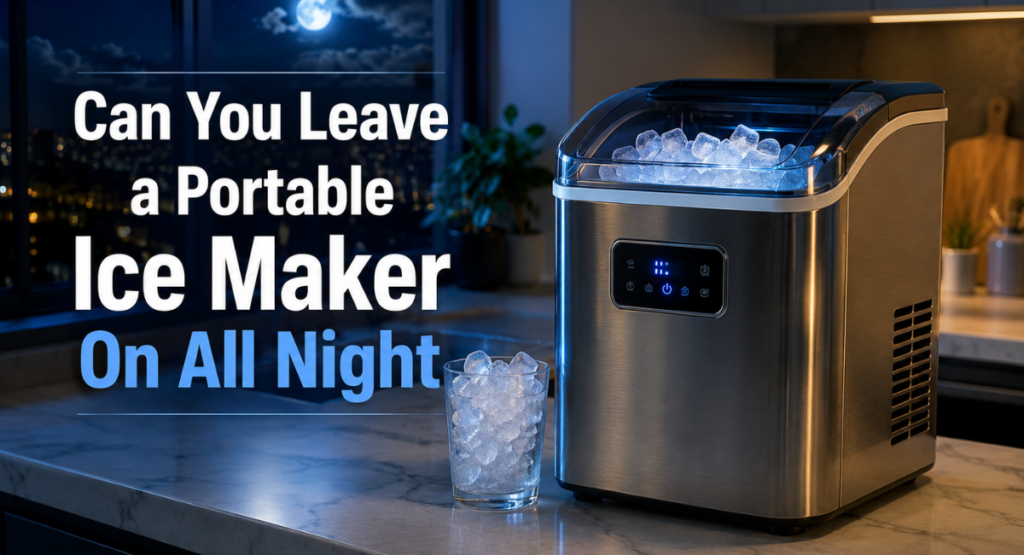
If you just bought a portable ice maker, you probably asked yourself this exact question: can you leave a portable ice maker on all night?
It is a smart question — and one that most buyers never think about until they are standing in the kitchen at 10 PM wondering whether to switch it off before bed.
The short answer is: yes, you can leave a portable ice maker on all night in most situations. But there is more to know before you decide. Running it overnight affects your electricity bill, the cleanliness of your ice, the lifespan of your machine, and even its safety.
This complete guide covers everything — from how these machines actually work overnight, to when you should turn them off, to the exact steps that keep yours running well for years.
Table of Contents
How a Portable Ice Maker Works Overnight
Before answering whether you can leave a portable ice maker on all night, it helps to understand what actually happens inside the machine while you sleep.
A portable ice maker does not freeze ice and then store it like a freezer. Instead, it runs in cycles. Here is what happens during a typical overnight cycle:
- Water from the reservoir is pumped onto cold metal prongs or a chilled plate.
- The compressor cools the prongs, freezing the water into ice in 6 to 15 minutes.
- The ice drops into an insulated storage bin.
- The bin fills up, sensors detect the ice level, and the machine pauses automatically.
- As ice slowly melts (because the bin is insulated, not frozen), the water drains back to the reservoir.
- The machine starts the cycle again.
This means when you leave a portable ice maker on all night, it does not run continuously. It cycles on and off depending on how full the bin is and how fast the ice melts. This is important — it means overnight operation is not as hard on the machine as you might think.
Is It Safe to Leave a Portable Ice Maker On All Night?
Yes — it is generally safe to leave a portable ice maker on all night, provided you follow a few basic rules.
Portable ice makers are designed with safety in mind. Most modern units include:
- Automatic shut-off when the bin is full
- Overheat protection for the compressor
- Water level sensors to prevent overflow
These built-in features make overnight operation safe for the vast majority of users. However, there are a few conditions that must be met.
Conditions for Safe Overnight Use
- Proper ventilation: Leave at least 5 to 6 inches of clearance around all sides of the machine. The compressor releases heat, and if that heat cannot escape, the machine overheats.
- Stable room temperature: Most portable ice makers are rated for indoor temperatures between 50°F and 100°F (10°C to 38°C). Leaving it in a hot garage or near a stove overnight reduces efficiency and adds strain.
- No extension cords: Plug the machine directly into a wall outlet. Extension cords can overheat under prolonged use and create a fire risk.
- Clean water in the reservoir: Do not leave stagnant water sitting in the tank for more than 24 hours before starting a session. Fresh water keeps ice tasting clean.
- Level surface: Place the machine on a flat, stable counter. A tilted unit can cause water to pool in the wrong area, leading to leaks or poor ice production.
If these conditions are met, leaving your portable ice maker on all night is perfectly safe.
What Happens to the Ice Overnight?
Here is something many people do not realize: the ice your portable ice maker makes overnight will not stay frozen until morning.
Because the storage bin is insulated but not refrigerated, ice slowly melts as it sits. The meltwater drains back into the reservoir, and the machine makes a fresh batch. This cycle repeats all night.
So when you wake up in the morning, your machine will have a fresh batch of ice — not 8 hours worth stored up. This is actually a good thing, because it means the ice you use in the morning is fresh and not stale.
Pro tip: If you want a large supply of ice for the next morning, run the machine overnight AND transfer the ice to your freezer every few hours. That way you build up a stockpile of fresh, frozen ice rather than relying on the bin alone.
Does Leaving It On All Night Shorten Its Lifespan?
This is one of the most common concerns — and it is a valid one. Running a portable ice maker all night does put extra hours on the machine. But whether it shortens lifespan significantly depends on how you manage it.
Here is what research and manufacturer data tell us about portable ice maker lifespan:
- A portable ice maker used moderately lasts 3 to 5 years on average.
- A machine left on 24/7 without proper maintenance may last only 1 to 3 years.
- A machine used overnight occasionally and cleaned regularly can last 5 to 7 years.
The key factor is not how long you run it — it is how well you maintain it.
What Wears Out Fastest
The compressor is the heart of any ice maker. It pumps refrigerant to freeze the water. The more it cycles on and off under heat and load, the faster it wears. The water pump is another common failure point — it circulates water from the reservoir to the freezing surface thousands of times per year.
If you leave your portable ice maker on all night regularly, do these three things to protect its lifespan:
- Keep the room cool and ventilated. A compressor working in a hot room works harder and fails sooner.
- Clean and descale monthly. Mineral buildup from hard water strains the pump and freezing mechanism.
- Give it a rest. If you do not need ice for a day or two, drain it, dry it out, and turn it off. Every rest helps.
How Much Electricity Does It Use Overnight?
Energy consumption is another major reason people wonder whether to leave a portable ice maker on all night.
Most portable ice makers use between 100 and 200 watts while the compressor is running. But they do not run continuously. The compressor cycles on and off, giving the machine an average consumption closer to 50 to 100 watts when averaged over time.
Here is a simple overnight cost estimate:
| Machine Wattage | Hours On | Avg. Duty Cycle | Energy Used | Cost at $0.17/kWh |
|---|---|---|---|---|
| 150W | 8 hours | 50% | 0.6 kWh | ~$0.10 |
| 150W | 8 hours | 70% | 0.84 kWh | ~$0.14 |
| 200W | 8 hours | 70% | 1.12 kWh | ~$0.19 |
Bottom line: Leaving a portable ice maker on all night costs roughly 10 to 20 cents per night in electricity — or about $3 to $6 per month if you do it every night. This is very affordable for most households.
In a warm room where ice melts faster, the duty cycle increases and so does the cost. Keeping the machine in a cool, well-ventilated area is the easiest way to reduce your overnight electricity use.
Does Leaving It On All Night Affect Ice Quality?
Yes, and this is often overlooked. Ice quality can decline when a portable ice maker runs all night without fresh water.
Here is why: as ice melts and the water cycles back into the reservoir repeatedly, mineral concentration in the water increases. This leads to:
- Cloudy or off-tasting ice
- Visible white flecks or residue on cubes
- A musty smell developing inside the machine
The fix is simple: refresh the water every 24 hours. If you run the machine overnight, drain and refill the reservoir the next morning before you start again. This one habit dramatically improves ice quality and keeps the machine cleaner.
When Should You Turn It Off Overnight?
While it is safe to leave a portable ice maker on all night in most situations, there are times when turning it off makes more sense.
Turn it off overnight if:
- You are going on vacation or leaving the home for more than a day. Drain it and dry it out completely before you go.
- The machine is in a room that gets very hot at night (above 90°F / 32°C), like a sunroom or garage in summer.
- You notice any unusual sounds, smells, or error lights — these are signs something is wrong and the machine needs attention before running unattended.
- You have not cleaned it recently. Running a dirty machine overnight builds up mold and bacteria faster than daytime use.
- You simply do not need ice overnight. If your mornings are the only time you use ice, run the machine for an hour before breakfast instead.
Leave it on overnight if:
- You are hosting an event the next day and need a large supply of ice ready.
- Your household uses ice throughout the day and you want a full bin ready each morning.
- The room is cool, well-ventilated, and the machine has been recently cleaned.
- You plan to transfer ice to your freezer to build up a stockpile.
Noise: What to Expect at Night
One practical concern about leaving a portable ice maker on all night is the noise. These machines are not silent.
A typical portable ice maker produces 35 to 55 decibels of noise — roughly equivalent to a quiet conversation or a running refrigerator. Most people find this easy to ignore in a kitchen or living area. However, if your machine is in a bedroom or near a light sleeper, the hum and the occasional click of ice dropping into the bin can be disruptive.
To reduce overnight noise:
- Place the machine on a rubber mat or folded towel to absorb vibration.
- Keep it on a solid, flat countertop rather than a hollow shelf.
- Position it away from walls so the sound does not bounce and amplify.
- If noise is a concern, use a timer plug to run the machine only during the hours you are most active.
Mold and Hygiene: The Overnight Risk Most People Ignore
The biggest hidden risk of leaving a portable ice maker on all night is not electricity or lifespan — it is mold and bacteria growth.
Warm, wet environments are breeding grounds for mold. The water reservoir, the internal tubing, and the storage bin are all consistently moist. When a machine runs overnight without regular cleaning, biofilm can develop inside the water lines within just a few weeks.
Signs your machine has a hygiene problem:
- Black or pink specks in the ice
- A sour, musty, or chemical taste in the ice
- Visible slime around the bin edges or under the lid
- Reduced ice production as buildup clogs internal components
Cleaning schedule for overnight users:
- Daily: Replace reservoir water with fresh water.
- Weekly: Wipe down the bin, lid, and scoop with a clean cloth. Run a rinse cycle if your model has one.
- Monthly: Deep clean with a food-safe ice maker cleaner or diluted white vinegar. Flush thoroughly and discard the first two batches after cleaning.
- Every 3 months: Wipe down the exterior vents and check for dust buildup around the compressor area.
If you follow this schedule, you can safely leave a portable ice maker on all night without any hygiene concerns.
Tips to Get the Most Out of Overnight Operation
Here are the most practical tips for anyone who wants to run their portable ice maker overnight:
- Use filtered or cold tap water. Filtered water produces clearer, better-tasting ice and reduces mineral buildup inside the machine.
- Place it in a cool spot. A cooler room means less melting, less compressor cycling, and lower electricity use.
- Give it 5 to 6 inches of clearance on all sides. This is the single most important thing you can do to protect the compressor.
- Never run it on an extension cord overnight. Use a dedicated wall outlet.
- Transfer ice to your freezer if you want a stockpile. Do not rely on the bin to store overnight ice — it will melt.
- Check it before bed. A quick visual check — is the water reservoir full, is the machine making ice, are there any warning lights — takes 10 seconds and gives you peace of mind.
- Clean it regularly. Overnight operation without cleaning leads to poor ice quality faster than daytime use.
FAQs
Can I leave a portable ice maker on all night without supervision?
Yes, in most cases. Portable ice makers have automatic shut-off features and overheat protection. As long as the machine is clean, well-ventilated, and plugged directly into a wall outlet, overnight unsupervised use is safe.
Will my portable ice maker overflow if left on all night?
No. Modern portable ice makers have bin sensors that detect when the basket is full and automatically pause production. The machine will not overflow.
Should I leave water in the reservoir overnight?
Yes, if you want the machine to make ice overnight. However, refresh the water every 24 hours to prevent stale taste and bacterial growth. If you are not using the machine, drain the reservoir completely.
How much ice will a portable ice maker make overnight?
It depends on the model and room temperature. Most portable ice makers produce 26 to 40 pounds of ice per 24 hours. Over 8 hours overnight, you can expect roughly 8 to 13 pounds of production — though the bin will only hold a fraction of that at any one time.
Is it okay to leave a portable ice maker on when not home?
For short absences (a few hours), yes. For longer periods — a full day or vacation — it is better to turn it off, drain it, and let it dry. This prevents mold growth and eliminates any electrical risk while the home is unattended.
Conclusion
So, can you leave a portable ice maker on all night? Yes — and for most households, overnight operation is completely safe, affordable, and practical.
The key is to do it right. Keep the machine clean, give it proper ventilation, use fresh water, and plug it directly into a wall outlet. Follow those rules and your portable ice maker will run reliably overnight — and for years to come.
If you want to build up a large supply of ice for an event or a busy day, running your machine overnight and transferring the ice to your freezer is one of the smartest moves you can make. You will wake up to a full supply of fresh ice without any morning wait.
For more helpful guides on getting the most from your portable ice maker, check out our articles on how fast a countertop ice maker makes ice, how to clean your ice maker properly, and what to do when your ice maker stops draining correctly.